Tuesday, August 16, 2022

SAIPAN CAROLINIANS IN CHINA?


CAROLINIAN CANOES


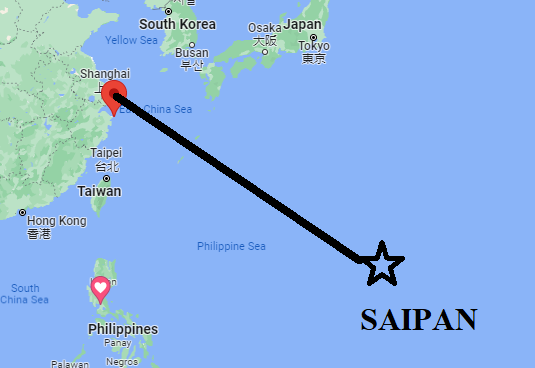
Sometime in 1909, Chinese fishermen discovered a canoe, with three unknown sailors from a different land, off Zhoushan Island in China, very close to Shanghai. What the Chinese did know was that these three foreign sailors were hungry, thirsty and weak. Had they not been discovered, they would probably had perished.

The Chinese fishermen took the three castaways to the civil authorities, but no one could speak to them as they had no common language.

The three lost sailors were described as being dark with frizzy hair. They wore huge earrings made of coral and shell, and necklaces made of the same material. The oldest of the three, who had a beard, also had tattoos. The only possession they had were two boxes of simple fishing material such as twines and hooks. Wearing only enough to cover their private parts, some of the people who found them gave them shirts and trousers.

Finally, after two days, someone considered that the three men might be from New Guinea, controlled at the time by the Germans. So, off they went to the German Consulate. The Germans still couldn't communicate with the three to verify where they were from, but someone was inspired to take out a map of the Pacific and show the map to the lost men. The castaways most likely wouldn't have had use for a map, probably never having used maps before nor being able to read. But when one of the Germans said out the name "Saipan" the three fishermen got all excited. They made unmistakable signs that they were from the island just mentioned.

If the three lost men were from Saipan and being described as they were, especially wearing large earrings and necklaces, then undoubtedly they were Carolinians from Saipan and not Chamorros. We add to these points the fact that Carolinians were still seafaring people at the time, while Chamorros no longer sailed the high seas in the same way. A Chamorro lost in China might be able to say "Saipan" or some words in Spanish or even English, even before a map was put in front of him.

I do not know if the three castaways ever made it back to Saipan, although that was the German government's intention.

But this story reminds us that Chamorro and Carolinian sailors could have unintentionally made it to Japan, Korea, China, Taiwan and many other places and we just don't know about it. Zhoushan Island is a long, long way from Saipan, as you can see on the map.


Tuesday, August 9, 2022

FAMILIA : MEGOFÑA/MAGOFÑA


MEGOFÑA and MAGOFÑA are one and the same name.

People in the old days were not that concerned about "proper" spelling or being consistent with spelling either. That's a modern-day anxiety.

Chamorro names and words were written by Spaniards, not by Chamorros until much later.

Not being their native language, and hearing sounds unlike the sounds they were used to, the Spaniards spelled Chamorro names and words in a variety of ways, and almost never consistent.


E FOR A

So, for example, the name we all now spell TERLAJE was also spelled TEDLAJE, TARLAJE, TARLAGE, TADLAJE in the old Spanish documents.

None of these differences bothered anybody in those days. The Chamorros knew how the name sounded. TAT plus LÅHE. TAT is short for TÅYA'. So Terlaje is really Tatlåhe, meaning "no man" or "no son."

The Spaniards often put an E where the Chamorros said an A. TER or TED instead of TAT. We see this also in TEDPAHOGO and TEDTAOTAO.

And we also see it in MEGOFÑA and MAGOFÑA. The name was spelled both ways. Even the same man named Megofña sometimes spelled it Magofña.

Some people think MAGOFÑA is just the Saipan way to spell it, but records show that even on Guam in the old days it was also spelled MAGOFÑA.

Just to give you a headache, sometimes the name was spelled MIGOFÑA. Only in modern times has it been standardized to MEGOFÑA for Guam and MAGOFÑA for Saipan.


As you can see, the name was even spelled MAGOFÑA on Guam at times. This is a document involving a Magofña who was living in Hagåtña (Agaña) in the early 1900s.


"HAPPY"

The meaning is pretty clear. The name comes from the word magof which means "happy." 

Magof-ña can mean "his or her being happy" or "he or she is happier."

They are a happy sort of people!


ASAN

The Guam Megofña name is mostly associated with Asan, although there were fewer Megofñas in Tepungan, which later moved down the road in American times and became Piti. But in the 1897 Guam Census, for example, more than half the families named Megofña on Guam lived in Asan. A few lived in Tepungan and one, a widow, lived in Sumay as she had married a Sumay man.

MARIANO MEGOFÑA of Asan married a Rita Pérez.

Their son VICENTE PÉREZ MEGOFÑA married twice. His first wife was Rita Bae Guerrero and his second wife was Carmen Chargualaf, the daughter of Josefa Chargualaf.

Mariano and Rita also had two daughters; Ramona married Gerónimo Maañao and Ana married Juan Manibusan Salas (the great grandparents of Judi Won Pat).

FRANCISCO MEGOFÑA also of Asan married María Terlaje.

Their son JOAQUÍN TERLAJE MEGOFÑA married Rosalía Pérez de la Cruz, the daughter of Felipe and Margarita.

In TEPUNGAN (part of Piti), 

JUAN MEGOFÑA married Josefa Atao.

Their son JOSÉ ATAO MEGOFÑA married María Flores, the daughter of María Flores.

Their daughter María had a daughter Rita out of wedlock in 1913.

There is also a good number of Megofñas on Guam who are the descendants of a man whose hometown I am unsure of, as he is absent in the 1897 Guam Census. Perhaps he was not living on Guam in 1897, or maybe he was accidentally overlooked. Either way, I cannot find his native place. His name was

ANASTASIO MEGOFÑA, son of María Megofña. He married Ana del Rosario Acosta, the daughter of Justo and Antonia. Some in this family lived in Hagåtña and some in Sinajaña before the war.

This is not a complete list, as there were women Megofñas who may have had children outside of marriage who would have continued the Megofña name.


SAIPAN

The Saipan Magofñas are all descendants of a man from Asan named

JOSÉ MAGOFÑA who was married to Gabina Fegurgur, Gabina was previously married to Lorenzo Chibog who had died.

José and Gabina had these sons :

VENANCIO FEGURGUR MAGOFÑA who married María de la Cruz Babauta.

VICENTE FEGURGUR MAGOFÑA who married Vicenta Santos Blas.

PEDRO FEGURGUR MAGOFÑA who married Rosa de la Cruz Quitugua.

LUÍS FEGURGUR MAGOFÑA who married Concepción (or Circuncisión) Lizama

All the Magofñas in the Northern Marianas are descendants of José and Gabina of Guam.

Some of the Magofñas of Saipan during Japanese times lived for a while in Luta and even Palau, and some of their children were born in those islands.


VICENTE FEGURGUR MAGOFÑA and wife VICENTA SANTOS BLAS
were both born on Guam but moved to Saipan when they were children with their parents

Tuesday, August 2, 2022

WAR STORIES : WATER HOSE


SEEING A WATER HOSE WOULD NEVER BE THE SAME AGAIN


Experiences of a young Chamorro girl during the Japanese Occupation.


Ma aresta si tatå-ho ni Chapanis sa' ma sospecha na guaha ha nåna'na' ginen i Chapanis ni man ma pribi.
(My father was arrested by the Japanese because they suspected he was hiding something from them which was prohibited.)

Gi magåhet, mannå'na' bateria si tatå-ho ni siña ma na' setbe para i redio, lao tåya' na ma gacha'.
(In reality, my father was hiding a battery which could be used for a radio, but he was never caught.)

Lao nahong ha' i ma sospecha ha' na guaha ha nåna'na' pues ma aresta.
(But it was enough to be merely suspected of hiding something so he was arrested.)

Ma konne' si tatå-ho para i ofisinan i Chapanis ya hu dalalaki siha lao ti ma tungo'.
(They took my father to the Japanese office and I followed them but they didn't know.)

Annai man hålom si tatå-ho yan i Chapanis gi ofisina, kahulo' yo' gi trongko para bai hu li'e'.
(When my father and the Japanese entered the office, I climbed a tree to look.)

Siña hu li'e' håfa ma susesede sa' lokka' i trongko ya siña hu li'e' gi bentåna.
(I could see what was going on because the tree was tall and I could see through the window.)

Ti hu tungo' håfa ma fafaisen si tatå-ho sa' ti siña hu hungok lao hu li'e' na ma patmåmåda si tatå-ho kada biråda.
(I didn't know what they were asking my father because I couldn't hear but I saw that they were slapping my father time after time.)

Despues, ma konne' si tatå-ho para i san hiyong ya, achok ha' ma kollat i lugåt, lokka' i trongko annai eståba yo' ya siña hu li'e'.
(Later they took my dad outside, and even though the place was fenced, the tree was tall where I was and I could see.)

Ma kana' i dos kanai-ña si tatå-ho gi un trongko ya esta i dos patås-ña ti ha papacha i edda'.
(They tied my dad's two hands to a tree and his feet were off the ground.)

Ma afuetsas un tilipas hånom gi halom pachot-ña ya ma na' bula i tiyån-ña ni hanom.
(They forced a water hose into his mouth and filled his stomach with water.)

Annai esta ma chuchuda' i hanom gi pachot-ña, ma na' påra i hanom ya ma tutuhon ma dommo' i tiyån-ña si tatå-ho asta ke muta' gue' todo hånom.
(When the water was already spilling from his mouth, they shut off the water and began to punch my dad's stomach until he was vomiting water.)

Ma'å'ñao yo' na siña måtai si tatå-ho lao en fin ma na' tunok gue'. Ti siña esta si tatå-ho tumohge ya umåsson ha' gi hilo' odda'.
(I was afraid my dad would die but finally they took him down. My dad couldn't stand and he just lay on the ground.)

Despues ma ågang si tiu-ho yan i primu-ho siha para u ma konne' si tatå-ho tåtte gi gima'.
(Later they called my uncle and my cousins to take my father back home.)

Despues nai hu tungo' na ma faisen si tatå-ho mångge si Tweed, ya ti ma hongge na ti ha tungo'.
(Later on I found out they were asking my dad where Tweed was, and they didn't believe that he didn't know.)

Lao annai esta annok na magåhet na ti ha tungo' sa' ma kastiga fehmaman lao tåya' ha sångan, ma hongge en fin na ti ha tungo'.
(But when it became clear that he really didn't know because they punished him so fiercely but he didn't say anything, they finally believed he didn't know.)

Lao desde ayo asta på'go ti siña hu sungon lumi'e' na guaha taotao gumigimen hånom ginen i tilipas, ya kontodo i famagu'on-ho yan i nietu-ho siha hu na' famåra siha mangimen hånom ginen i tilipas yanggen hu li'e'.
(But from that time till now I can't stand to see someone drink water from a hose, and even my children and grandchildren I stop them when I see them drinking water from a hose.)


NOTES

Tweed - was an American Navy radioman who fled from the Japanese and was taken cared of by many Chamorros. He was a thorn in the side of the Japanese the whole time and was rescued by an American ship when the US came back to retake Guam.

Tilipas literally means "intestines" and when rubber hoses came to Guam during American times, Guam Chamorros called hoses tilipas. In the Northern Marianas, the Chamorros there used the Japanese word hos for "hose."

Påtas - originally meant feet of animals (or of furniture) and addeng meant human feet. Guam Chamorros began using påtas even for human feet, but in the Northern Marianas the original meaning of both påtas and addeng remain.

Tuesday, July 26, 2022

ONE DAY IN TANAPAG


TALISAI NUTS


I was early for a Mass in Tanapag in Saipan so I decided to park by the beach as the sun began its descent.

Out of my rear view mirror, I saw a huge utility truck pull up behind me. I lowered my window and, since I didn't want to assume the driver spoke Chamorro, I asked in English, "Do you need me to move my car? Are you doing work here?" He said, "No, no, you're good." I could tell from the accent he was not from another country but was someone local. He went over to a couple of ladies sitting nearby and sat down.

The scenery looked inviting so I got out of my car almost immediately after the man sat down with the ladies and I heard him tell them, in Chamorro, "Mamaisen este kao para bai facho'cho' guine," "This guy asked if I'm going to do some work here."

I walked out further from my car, which was partially hiding me from them, and now they could see I was a priest, and I smiled at them and said, "Adahe sa' siña ha' yo' fumino' Chamorro!" "Be careful because I can speak Chamorro!" And they laughed and we started a conversation.

The ladies had gotten to the beach first and were eyeing the tall talisai tree. The nuts looked ripe for the picking. By the grace of God, the man was just knocking off from work and drove his utility truck, the one with the buckets to lift workers up to the top of utility poles, to the beach. The ladies saw an opportunity. Let's climb on the truck and reach the nuts with our pole.

One of the ladies got up and used a pole to knock down the nuts. The others collected the fallen nuts, and cut them open.

"Estague' kandin-måme åntes!" "This was our candy before!" they kept saying.

People would either eat the seeds of the nuts "as is" or cook them in sugar in a pan. The taste of the talisai is like almonds, and one of the English names for it is "sea almonds" because the trees often grow on the shore.


Talisai (scientific name, terminalia catappa) has many health benefits, both the nut and the leaves. It is one of the plants used in the old days for medicinal reasons. The wood of the tree is also used and the tree itself is desirable for the abundant shade it provides.


There are places called Talisay, both on Guam and in the Philippines. The talisai more than likely was brought to the Marianas from the Philippines, since our name for it is the same as the Filipino.


A LESSON

Coming upon these friendly people in Tanapag purely by happenstance taught me a nice lesson of island life. To enjoy the talisai staring right in front of you, free of charge, a gift from God, so unappreciated by modern generations; to speak our language, laugh and be cheerful, and to be made a part of the gang instantly, hearing them say, "Let the priest try," several times. This is the kind of spirit we once had everywhere in our islands, unseen now in many parts, but which can still be found in the quiet, breezy shore of Tanapag if you manage to slow down and just park at the beach waiting to see what might happen.


Tuesday, July 19, 2022

WASHING IN THE TOILET


The man who told me this is long gone, so I can't go back to him and verify the story. But when he told me this anecdote twenty or more years ago, he seemed very serious.

He said he was a teenager when the Japanese occupied Guam. He was old enough to earn a few sen (Japanese coins) as a kind of errand boy or runner.

One day, he said, he was told by a Japanese civilian official to run to so-and-so's house and deliver a written message to a Japanese living at that house, which belonged to a Chamorro family but had been taken over by the Japanese. The Chamorro family preferred to live at their ranch to feed themselves and avoid the Japanese, anyway. 

The boy gave the message and waited for the Japanese man to write down his response for the boy to take back.

While the boy stood there waiting, his eyes moved to the open door of the restroom. There he saw a Japanese soldier kneel in front of the toilet and wash his face! That soldier got up, and was replaced by yet another Japanese soldier kneeling down and washing his face in the toilet.

Later the boy found out that Japanese toilets were very different from American ones. Either the Japanese soldier didn't know what this ceramic seat filled with water was used for, or he didn't care.

Wartime creates some very interesting stories.


Monday, July 11, 2022

O SÅNTOS NA ESPIRITU


Perhaps it was 1992 or 1993 when I was stationed in Saipan. I walked into the sanctuary at Kristo Rai Church in Garapan to start the 6AM Mass and was startled when the singers began the entrance hymn because I hadn't even reached the altar yet when I thought they were singing to me!

The line they sang went, "Pot kuentos Påle' ina ham...." "Through Father's words enlighten us...."

What were they referring to?

So I asked them to tell me the whole verse. It ended up being a prayer to the Holy Spirit to teach the people through the priest's words. More about that later, but here is the audio and lyrics, with English translation.


O Såntos na Espiritu, i kandet Tåta, må'gas Yu'us.
(O Holy Spirit, light of the Father, great God.)

Pot kuentos Påle' ina ham, doktrinan Yu'us fanå'gue ham.
(Through the words of the priest enlighten us, teach us the doctrine of God.)


ORIGIN

This little verse was introduced to Saipan by the German Capuchin missionaries who were in the Northern Marianas from 1906 to 1919. It appears in a little hymnal they published in 1915. It's possible that the melody is borrowed from a German hymn.

It's such a short verse that it was probably composed to be sung outside of Mass (which was said in Latin). It would have been an appropriate verse to sing right before catechism or before the priest preached a sermon. In the old days, sermons were not preached just during Mass. Sermons were preached as a stand-alone event, or as part of a devotion, such as a novena or the Stations of the Cross.

In fact, an old custom, not done all the time, was to put a dove above the pulpit where the priest preached. The idea was, as long as the priest was teaching the doctrine of the Church, he was teaching what the Holy Spirit ensured was God's truth. You can see in the picture at the top of this post a dove above the pulpit.

Tuesday, July 5, 2022

FUNERAL RECEIPT 1925


This receipt for church funeral services was issued to prove that a member of the deceased's family shouldered that cost. It was needed in a court case in 1925 to settle a family dispute over the estate of the deceased.

For much of the Spanish period, the missionaries published a schedule of fees for many church services, and not just for spiritual services. This schedule of fees was called ARANCEL in Spanish.

Sacraments cannot be bought; it is against Church law to do so and any priest who tries to sell sacraments, blessings or blessed objects will be punished by the Church itself.

But churches and priests also had to pay bills, and a fee for a baptismal certificate, for example, meant the parish had to buy paper (rarely were blank certificates printed before-hand, another expense). A priest had to buy food and supplies and, on occasion, give monetary support to someone doing work or a service for the church. These fees met those expenses.

In those days, most people grew or caught their own food, made their own household tools or items, or traded goods for goods, that they had less reason than today to use what cash they had. That unused cash often went to their local church for Masses. American Navy officials sometimes "complained" about it.

The poor were never deprived of church services on account of their inability to pay fees. To do so was against Church rules. Fees were sometimes paid with a dozen eggs or a sack of corn meal. Many cashless people paid others in general this way.

The priest who wrote the receipt was Father Bernabé de Cáseda, a Capuchin friar from Spain. He was stationed in Inalåhan for a long time and built the church there that exists to this day. He was in Inalåhan so long that several baby boys in Inalåhan were named Bernabé after him. Bernabé is the Spanish way of saying Barnabas. Saint Barnabas was a companion of Saint Paul the Apostle.


PÅLE' BERNABÉ


In those days, no Spanish priest could be assigned to a village until he first learned enough Chamorro to be able to communicate with his people, and he had to pass a test given by Påle' Román, the Spanish priest considered the expert in the Chamorro language. In the 1920s and 30s, huge numbers of Chamorros on Guam could not speak English and spoke only Chamorro.

Let's look at the Chamorro used in the receipt :


Guåho Fr. Bernabé de Cáseda hu resibe ginen as Ignacio LG San Nicolas pot i entierron Dolores Castro Concepcion ini na limosna :
(I Friar Bernabé de Cáseda received from Ignacio LG San Nicolas for the funeral of Dolores Castro Concepcion this donation :)

Entierro Solemne yan Misa Cantada.....$14.00
(Solemn Funeral and Sung Mass.....$14.00)

Gi Noviembre na pulan pot responso....$0.75
(In the month of November for responso....$0.75)

Hu na' magåhet ini
(I certify this)

Fr. Bernabé de Cáseda

Inalåhan 22.II.1925


OK let's break it down :

1. The Fr in the receipt does not stand for "Father" but for the Spanish title "Fray" which means "Friar." Father Bernabé was a Capuchin Franciscan friar and, even though he was also a priest, his identity as a friar wasn't forgotten. Friars who were priests often titled themselves "Fray Padre," or "Friar Father."

2. You can tell the typewriter he used was probably manufactured in Spain since it had keys to type Spanish accent marks, like the dash over the E in Bernabé and over the A in Cáseda.

3. Father Bernabé uses the old word for "this" which is ini. More people used the Spanish word este.

4. Church services could be simple or solemn; recited or sung. If Mass was sung, this meant a choir had to sing at Mass and choir members had to take time out of their day to do that. So more fees were paid the more services were requested.

5. A responso is a prayer said for the dead. November is the month the Poor Souls in Purgatory are remembered in a special way, and one could request a priest to say a responso in November at the grave(s) of one's loved one(s).

6. The literal meaning of "I certify this" in the receipt is "I make this true."

7. The dating format is European, not American. First comes the day of the month (the 22nd), then the month in Roman numerals (II, or 2, which means February), then the year.


VERSIÓN ESPAÑOLA
(traducida por Manuel Rodríguez)

PADRE BERNABÉ Y UN RECIBO DE 1925

El recibo que vemos abajo, por los servicios funerarios eclesiásticos, se emitió para probar que un miembro de la familia del difunto se hizo cargo de ese costo. Fue necesario en un caso judicial en 1925 para resolver una disputa familiar sobre la herencia del difunto.

Durante gran parte de la época española, los misioneros publicaron un cronograma de tarifas para muchos servicios de la iglesia, y no solo para servicios espirituales. Este cuadro de tarifas se denominó ARANCEL.

Los sacramentos no se pueden comprar; va contra la ley de la Iglesia hacerlo y cualquier sacerdote que intente vender sacramentos, bendiciones u objetos sagrados será castigado por la propia Iglesia.

Pero las iglesias y los sacerdotes también tenían que pagar facturas, y una tarifa por un certificado de bautismo, por ejemplo, se debía a que la parroquia tenía que comprar papel. Un sacerdote tenía que comprar alimentos y suministros y, en ocasiones, dar apoyo monetario a alguien que realizaba un trabajo o un servicio para la iglesia. Estos honorarios cubrían esos gastos.

En aquel tiempo, la mayoría de las personas cultivaban o pescaban sus propios alimentos, fabricaban sus propias herramientas o artículos domésticos, o intercambiaban bienes por otros bienes, por lo que tenían menos razones que hoy para usar el dinero en efectivo que tenían. Ese efectivo no utilizado a menudo iba a su iglesia local para misas. Los oficiales de la Armada estadounidense a veces se "quejaban" al respecto.

Los pobres nunca eran privados de los servicios de la iglesia debido a su incapacidad para pagar las cuotas. Hacer eso estaba en contra de las reglas de la Iglesia. A veces, las tarifas se pagaban con una docena de huevos o un saco de harina de maíz. Muchas personas sin efectivo pagaban a otros en general de esta manera.

El sacerdote que hizo el recibo fue el Padre Bernabé de Cáseda, un fraile capuchino de España. Estuvo destinado en Inaraján durante mucho tiempo y construyó allí la iglesia de San José que existe hasta el día de hoy. Estuvo en Inaraján tanto tiempo que varios bebés varones de Inaraján recibieron el nombre de Bernabé en su honor. San Bernabé fue compañero de San Pablo Apóstol.

En aquellos días, ningún sacerdote español podía ser asignado a un pueblo hasta que primero aprendiera suficiente chamorro para poder comunicarse con su gente, y tenía que pasar una prueba dada por Påle' Román, el sacerdote español considerado el experto en el idioma chamorro. En las décadas de 1920 y 1930, una gran cantidad de chamorros en Guam no hablaban inglés y solo hablaban chamorro.

Veamos el chamorro utilizado en el recibo:

<<Guaho Fr. Bernabé de Cáseda hu resibe ginen as Ignacio LG San Nicolas pot i entierron Dolores Castro Concepcion ini na limosna :

(Yo Fray Bernabé de Cáseda recibí de parte de Ignacio LG San Nicolás por el entierro de Dolores Castro Concepción esta limosna:)

Entierro Solemne yan Misa Cantada.....$14.00

(Entierro Solemne y Misa Cantada.....$14.00)

Gi Noviembre na pulan pot responso....$0.75

(En el mes de noviembre por responso....$0.75)

Hu na' magåhet ini

(Yo certifico esto)

Fray Bernabé de Cáseda

Inalahan 22.II.1925>>

Bueno, vamos a desglosarlo:

1. El “Fr” en el recibo no significa "Padre" sino el título español "Fray" que significa "Fraile". El Padre Bernabé era un fraile franciscano capuchino y, aunque también era sacerdote, su identidad como fraile no fue olvidada. Los frailes que eran sacerdotes a menudo se titulaban "Fray Padre" o "Fraile Padre".

2. Se puede decir que la máquina de escribir que usó probablemente fue fabricada en España ya que tenía claves para escribir acentos españoles, como la tilde sobre la E en Bernabé y sobre la A en Cáseda.

3. El Padre Bernabé usa la antigua palabra para "esto" que es “ini”. Otra gente usaba la palabra de origen español “este”.

4. Los servicios de la iglesia pueden ser simples o solemnes; recitado o cantado. Si se cantaba Misa, esto significaba que un coro tenía que cantar en Misa y los miembros del coro tenían que tomarse un tiempo de su día para hacerlo. Así que se pagaban más honorarios cuantos más servicios se solicitaban.

5. Un responso es una oración que se dice por los difuntos. Noviembre es el mes en que se recuerda de manera especial a las Pobres Almas del Purgatorio, y uno podría pedirle a un sacerdote que dijera un responso en noviembre en la(s) tumba(s) de un(os) ser (es) querido(s).

6. El significado literal de "Certifico esto" en el recibo es "Hago esto verdadero".

7. El formato de fechas es europeo, no americano. Primero viene el día del mes (el 22), luego el mes en números romanos (II o 2, que significa febrero), luego el año.


Tuesday, June 28, 2022

CHAMORRO GRAVE IN ANGAUR


CECILIA CAMACHO CABRERA
1922 to 1923


Angaur is one of the Palau islands, situated at the very southern part of the island chain.

When the Germans got control of the Caroline Islands in 1899, they got control over Palau. Around 1909, the Germans started to mine Angaur for phosphate, which makes excellent fertilizer in the production of plants. It can also be turned into phosphoric acid which is used for many things, from cosmetics to animal feed. Money could be made selling phosphorus, and the Germans wanted to make money.

But they needed workers. Angaur had a small population, so workers from all over those parts of the  Pacific where the Germans were in control were recruited to work in Angaur. Workers came from the other Caroline islands under the Germans, from China (the Germans controlled the port city of Tsingtao) and the Northern Marianas, also under the Germans.


ANGAUR PHOSPHATE MINES


When the Japanese took over all the German territory in Micronesia in 1914, they continued the mining of phosphorus in Angaur and the recruitment of workers from other areas.

So, Chamorros from Saipan, and a few from Luta, moved to Angaur.

One of them was Ramón Taisague Cabrera and his wife Consolación Campos Camacho. Ramón was born in Guam but moved to Saipan when he was a child when his parents, Antonio Garrido Cabrera and Agapita San Nicolás Taisague, moved to Saipan in the 1880s. One of their children, María, was born in Angaur in 1917 so the Cabreras were in Angaur at least by 1917.

If Cecilia, the deceased infant buried in Angaur, is indeed the child of Ramón and Consolación, as I suspect she was, then she, too, was born in Angaur but died in her first year of life. The Cabreras may have had other children born in Angaur who died there in infancy.


THE CHAMORRO LÁPIDA IS IN SPANISH

Some of the writing on the gravestone or lápida is no longer legible, but most of it can still be read and it's in Spanish. The Spanish had left Micronesia for twenty years already, but the Spanish language was still being used by older Chamorros who had been raised under Spain and by the Spanish missionaries. In 1923, when Cecilia died, all the Catholic missionaries in Micronesia (except for Kiribati and Nauru), including Guam, were Spanish.


After World War II, almost all the Chamorros on Palau went back to the Marianas, except for some Palauans who had Chamorro blood, the children of Chamorro men who had married Palauan women.


VERSIÓN ESPAÑOLA
(traducida por Manuel Rodríguez)

LÁPIDA CHAMORRA EN ANGAUR

Angaur es una de las Islas Palaos, situada en la parte más meridional de la cadena insular.

Cuando en 1899, los alemanes obtuvieron de los españoles el control de las Islas Carolinas, se hicieron también con el control de Palaos. Alrededor de 1909, los alemanes comenzaron a extraer fosfato de Angaur, que es un excelente fertilizante para la producción de plantas. También se puede convertir en ácido fosfórico que se usa para muchas cosas, desde cosméticos hasta alimento para animales. Se podía ganar dinero vendiendo fósforo, y los alemanes querían ganar dinero.

Pero necesitaban trabajadores. Angaur tenía una población pequeña, por lo que se reclutaron trabajadores de otras partes del Pacífico donde los alemanes tenían el control. Los trabajadores llegaron de las otras Islas Carolinas bajo el poder de los alemanes, de China (los alemanes controlaban la ciudad portuaria de Tsingtao) y de las Islas Marianas del Norte, también bajo soberanía germana.

Cuando en 1914, los japoneses se apoderaron de todo el territorio alemán en Micronesia, continuaron con la extracción de fósforo en Angaur y la contratación de trabajadores de otras áreas del Pacífico.

Entonces, los chamorros de Saipán y algunos de Rota se mudaron a Angaur.

Uno de ellos fue Ramón Taisague Cabrera y su esposa Consolación Campos Camacho. Ramón nació en Guam pero se había mudado a Saipán cuando era un niño, cuando sus padres, Antonio Garrido Cabrera y Agapita San Nicolás Taisague, se mudaran a Saipán en la década de 1880. Uno de sus hijos, María, nació en Angaur en 1917 por lo que los Cabrera residían en Angaur al menos desde esa fecha.

Si Cecilia, la bebé fallecida y enterrada en Angaur, es efectivamente hija de Ramón y Consolación, como sospecho que lo era, entonces ella también nació en Angaur pero murió en su primer año de vida. Los Cabrera podrían haber tenido otros hijos nacidos en Angaur que murieron allí durante su infancia.

LÁPIDA CHAMORRA EN ESPAÑOL

Parte de la escritura de la lápida ya no es legible, pero la mayor parte todavía se puede leer y está en español. Los españoles ya habían dejado Micronesia desde hacía unos veinte años, pero el idioma español todavía lo usaban los chamorros mayores que se habían criado bajo la soberanía y los misioneros españoles. En 1923, cuando falleció Cecilia, todos los misioneros católicos en Micronesia (excepto Kiribati y Nauru), incluido Guam, eran españoles.

Después de la Segunda Guerra Mundial, casi todos los chamorros de Palaos regresaron a las Marianas, excepto algunos palauanos que tenían sangre chamorra, hijos de hombres chamorros que se habían casado con mujeres palauanas.


Tuesday, June 21, 2022

LOST LIMBS RESTORED


Three, young Chamorro women lost either a leg or a hand, thanks to World War II.


Two were sisters, entering their teens. Isabel Mendiola Iglesias was just ten years old when the war started, and her younger sister Magdalena Mendiola Iglesias was just nine.

Rosario Benavente Pablo was a bit older. She was nineteen when the war started. 

During the battle to retake Guam from the Japanese by the Americans, Isabel lost a leg and Magdalena lost a hand. Rosario lost a leg. Sisters Isabel and Magdalena were injured when American shrapnel exploded on August 2.

From Rosario's children we know the story. Rosario and her family were hiding up north on Guam when the Americans returned and severe fighting began between the Americans and the Japanese, who constantly moved north. Rosario's family started to move southward and spent the night in an abandoned structure in Liguan near Dededo. An American bomb hit the house; more than one family member was injured but Rosario's leg was severely damaged. They made it to the American lines and Rosario was taken to the American field hospital and her leg was amputated.


MARE ISLAND


MARE ISLAND NAVAL HOSPITAL


Right by Vallejo, California, not far from San Francisco, the US Navy operated a hospital with a special division; an Orthopedic Department opened to care for thousands of American soldiers who lost hands, arms, feet or legs in warfare.

Somehow Isabel, Magdalena and Rosario were able to receive the same kind of care at Mare Island, courtesy of the US Navy.  The American Legion also donated to the cause. The three ladies were part of a group of nine young men and women from Guam who were sent to Mare Island by the US Navy to have lost limbs restored artificially. They arrived in San Francisco in December of 1946 aboard the Navy hospital ship the USS Haven. A Chamorro interpreter went along with the group.

First, the three ladies had to be looked over to see what artificial limbs could be designed for them. Once made, the artificial limbs had to be fitted to the ladies' natural limbs. Then the ladies had to be trained how to use their artificial limbs, such as how to walk with an artificial leg to appear as natural as possible. Magdalena was taught how to use makeup on her artificial hand to match her natural skin tone.

The good news is that all three ladies lived long and happy lives. Isabel married Juan Crisóstomo Mafnas; Magdalena married Clemente León Guerrero Dueñas and Rosario married Terencio Lim Villaverde.

Others mentioned in the group were José Taitingfong, age 16, lost his right hand and wrist, and also needed treatment for his left eye blinded by incendiaries in June of 1944.


MARIANO ANDERSON ALSO TREATED
Lost a leg when the Japanese bombed Sumay in 1941


Two older members of the group were not injured by American fire power but by the Japanese earlier than 1944. Mariano Aguon Anderson, age 37, lost his left leg when the Japanese bombed Guam on December 8, 1941. A Japanese surgeon later amputated the injured leg. Francisco Cruz Dungca, also 37, was forced by the Japanese to work in an agricultural project. Some angry Japanese soldier clubbed his left leg and it was so badly injured that it, too, was amputated by a Japanese surgeon.


Before they were fitted with artificial limbs, you can see in this photo taken upon their arrival that the girl on the left, more than likely Isabel Iglesias, is missing a leg.


Tuesday, June 14, 2022

BISHOP OLANO WRITES IN CHAMORRO


BISHOP OLANO AND SISTER MARY MARK


Bishop Miguel Ångel Olano was the Bishop of Guam from 1934 until 1945. He first arrived on Guam from his native Spain in 1919 and in time was assigned to the parish of Sumay, staying there all the way till he was made bishop.

The 1920s and 30s were a time when all Chamorros on Guam spoke Chamorro (imagine that!). For many of them, it was the only language they knew. Many couldn't speak English even if they wanted to, except for a few words like "yes" and "no."

Outsiders had to find translators, then, or better yet learn Chamorro themselves. This is what the Spanish Capuchin missionaries, as Olano was, did. A priest definitely had to learn Chamorro in those days, in order to hear confessions in Chamorro, preach in Chamorro and interact with his Chamorro flock.

Some missionaries did better in Chamorro than others. One, Påle' Román, was considered an authority in the language, many older people now deceased telling me he spoke better Chamorro than many Chamorros. Olano was also one of the better ones in Chamorro. He spoke it well, without the need to look up words in a dictionary.

One little piece of evidence showing his fluency in Chamorro is this letter he wrote in Chamorro in the year 1967. That was 22 years after he left Guam. For 22 years he had no one to speak Chamorro with, having moved to Manila in 1945 and then to Spain. On occasion, the Spanish missionaries who had lived on Guam, and were now living elsewhere, would speak Chamorro to each other now and then when they would meet up. But for the most part they had no occasion to use Chamorro, and yet they retained their knowledge of the language twenty or more years after they left Guam.


The event that occasioned this letter in Chamorro was the appointment of Sister Mary Mark Martínez as Superior of the Mercy Sisters on Guam in 1967. Olano had been very close to Sister's parents, Pedro and María Martínez, and knew Sister when she was a young girl before the war. Sister's appointment as Superior definitely swelled Olano's heart with pride and joy, first of all because of his connection with the Martínez family but secondly because the Spanish missionaries before the war tried so hard to get Catholic Sisters to come to Guam but couldn't. They found Sisters willing to come to Guam, but the US Navy stopped them from coming. Olano couldn't help but be happy and proud that, not only had Sisters finally come to Guam after the war; not only because Chamorros had become Sisters; but now because a Sister from a family he was close to had become Superior.

Writing on August 17, 1967 from San Sebastián, Spain, Olano says :

Sister Mary Mark Martínez, Superior :

Hu taitai gi Umatuna si Yu'us na hågo ma ayek para må'gas i etmånas guennao giya Guam. Este na "news" ha na' magof yo' dångkulo, sa' primet biåhe na una relihiosa taotao Guam ma ayek para este na dångkulo na puesto. Sister Mary Mark, "congratulations" nu hågo yan lokkue' todo i etmåna ni mañåsaga gi konbento. I bendision Yu'us nu hågo, ya siña mesngon, gai pasiensia, etc. Hu tungo' na i etmåna guennao man sen mesngon lokkue'. Ti hu tungo' na guaha åguaguat entre siha.

Adiós, ya todos hamyo en tayuyute i hagas Obispo.

+M.A. Olano

In English :

I read in the Umatuna si Yu'us that you were chosen to be the superior of the Sisters there in Guam. This news made me so happy, because it is the first time that a religious woman from Guam was chosen for this important office. Sister Mary Mark, congratulations to you and also to all the Sisters living in the convent. The blessing of God to you, that you may be enduring, patient, etc. I know that the Sisters there are also very forbearing. I do not know if there are any unruly ones among them.

Farewell, and all of you pray for the former Bishop.


SOME OBSERVATIONS

1. The Umatuna si Yu'us is the weekly newspaper of the Catholic Church on Guam, published by the Archdiocese (Diocese, at the time). Someone was mailing him a copy in Spain. Who and how often, I do not know.

2. Olano is mistaken in saying that Sister Mary Mark was the first Chamorro Superior of the Mercy Sisters on Guam, but he had been away for many years already and news was not as easily obtained in those days before the internet. It was actually Sister Callista Camacho who was the first Chamorro Superior of the Mercy Sisters on Guam, being appointed in 1960 and serving till 1963. Sister Mary Mark was the second Chamorro Superior, appointed in 1967.

3. It's interesting that Olano uses two English words when he could have used the Spanish/Chamorro equivalents; notisia for "news" and enorabuena for "congratulations."


VERSIÓN ESPAÑOLA
(traducida por Manuel Rodríguez)

EL OBISPO OLANO ESCRIBE EN CHAMORRO

Monseñor Miguel Ángel Olano fue obispo de Guam desde 1934 hasta 1945. Llegó por primera vez a la isla desde su España natal en 1919 y con el tiempo fue asignado a la parroquia de Sumay, permaneciendo allí hasta que fue nombrado obispo.

Las décadas de 1920 y 1930 fueron una época en la que todos los chamorros de Guam hablaban chamorro (¡imagínense eso!). Para muchos de ellos, era el único idioma que conocían. Muchos no podrían hablar inglés aunque quisieran, a excepción de algunas palabras como "sí" y "no".

Los forasteros tenían entonces que encontrar traductores, o mejor aún, aprender chamorro ellos mismos. Así lo hicieron los misioneros capuchinos españoles, como lo fue Olano. Un sacerdote definitivamente tenía que aprender chamorro durante aquellos tiempos, para poder escuchar confesiones en chamorro, predicar en chamorro e interactuar con su rebaño chamorro.

A algunos misioneros les fue mejor en chamorro que a otros. Uno, Påle' Román, era considerado una autoridad en el idioma, muchas personas mayores ya fallecidas me decían que hablaba mejor chamorro que muchos chamorros. Olano también fue uno de los mejores en idioma chamorro. Lo hablaba bien, sin necesidad de buscar palabras en un diccionario.

Una pequeña evidencia que muestra su fluidez en chamorro es esta carta que escribió en el año 1967. Eso fue 22 años después de que saliera de Guam. Durante 22 años no tuvo con quien hablar chamorro, habiéndose mudado a Manila en 1945 y luego a España. En ocasiones, los misioneros españoles que habían vivido en Guam y después vivían en otros lugares, a veces se hablaban en chamorro, cuando se reunían. Pero en su mayor parte no tuvieron ocasión de usar el chamorro y, sin embargo, conservaron su conocimiento de la lengua veinte o más años después de salir de Guam.

El evento que ocasionó esta carta en idioma chamorro fue el nombramiento de la Hermana Mary Mark Martínez como Superiora de las Hermanas de la Misericordia en Guam en 1967. Olano había estado muy cerca de los padres de la Hermana, Pedro y María Martínez, y la conoció cuando era una niña, antes de la guerra. El nombramiento de la Hermana como Superiora definitivamente infló el corazón de Olano con orgullo y alegría, en primer lugar por su conexión con la familia Martínez, pero en segundo lugar porque los misioneros españoles antes de la guerra se esforzaron mucho para que monjas católicas vinieran a Guam. Encontraron Hermanas dispuestas a venir a la isla, pero la Marina de los EE. UU. se lo impidió. Olano no pudo evitar sentirse feliz y orgulloso de que las Hermanas no solo habían llegado finalmente a Guam, después de la guerra; sino porque numerosas chamorras se habían convertido en religiosas; e incluso ahora una Hermana de una familia cercana a él se había convertido en Superiora.

Escribiendo el 17 de agosto de 1967 desde San Sebastián, España, Olano dice:

“Leí en el Umatuna si Yu'us que fuiste elegida para ser la Superiora de las Hermanas ahí en Guam. Esta noticia me alegró mucho, porque es la primera vez que una religiosa de Guam es elegida para este importante cargo. Hermana Mary Mark, felicidades para usted y también para todas las Hermanas que viven en el convento. La bendición de Dios para ustedes, para que sean perseverantes, pacientes, etc. Sé que las Hermanas ahí también son muy tolerantes. No sé si hay algunos rebeldes entre ellas.

Adiós y recen todos por el antiguo obispo”.

 ALGUNAS OBSERVACIONES

 1. El Umatuna si Yu'us es el periódico semanal de la Iglesia Católica en Guam, publicado por la Arquidiócesis (Diócesis, en ese momento). Alguien le enviaba una copia a España. Quién y con qué frecuencia, no lo sé.

 2. Olano se equivoca al decir que la Hermana Mary Mark fue la primera chamorra Superiora de las Hermanas de la Misericordia en Guam, pero Olano ya llevaba muchos años fuera y las noticias no eran tan fáciles de obtener en esos días antes de internet. En realidad, fue la Hermana Callista Camacho la primera Superiora chamorra de las Hermanas de la Misericordia en Guam, siendo nombrada en 1960 y sirviendo hasta 1963. La Hermana Mary Mark fue la segunda Superiora chamorra, nombrada en 1967.

 3. Es interesante que Olano en su carta en chamorro, use dos palabras en inglés cuando podría haber usado los equivalentes en español/chamorro; notisia para "noticia" y enorabuena para "felicidades".

Tuesday, June 7, 2022

NOT ONE WORD IN CHAMORRO


It was the first day of school in 1935 and the American teacher came into the classroom and said,

"Now, students! As soon as class begins, I don't want to hear a single word in Chamorro coming out of your mouths! Not one single word! All English, you understand? All English!"

The children nodded their heads.

The American teacher then looked at a boy and said, "And you. What is your name?"

The boy replied, "SECOND ERASED LANDLESS!"

The American teacher was amazed! She said, "SECOND ERASED LANDLESS! What kind of a name is that?"

The boy replied, "My name is really SEGUNDO MAFNAS TAITANO but you said not a single word in Chamorro!"


§§§§§§§§§§§§§§§§§§§§§§§§§§§§§§§§§§§§§§§§§§§§§§§§§§§§§§§§§§§§§§§§§§


To explain a joke is to kill a joke, but for those who need to know :

SEGUNDO means "second"

MAFNAS means "erased"

TAITANO means "landless"

The humor is found in the fact that all three words are real names used by Chamorros.


VERSIÓN ESPAÑOLA
(traducida por Manuel Rodríguez)

NI UNA PALABRA EN CHAMORRO

Era el primer día de clase en 1935 y la maestra americana entró en el aula y dijo:

"¡Ahora, estudiantes! ¡Tan pronto como comience la clase, no quiero oír ni una sola palabra en chamorro que salga de sus bocas! ¡Ni una sola palabra! Todo en inglés, ¿entienden? ¡Todo en inglés!"

Los niños asintieron con la cabeza.

La maestra americana miró entonces a un niño chamorro y le preguntó: "Y tú, ¿cómo te llamas?"

El niño respondió: "SECOND ERASED LANDLESS!"

¡La maestra estaba asombrada! Ella exclamó: "SECOND ERASED LANDLESS! ¿Qué clase de nombre es ése?"

El niño chamorro respondió: "Mi nombre en realidad es SEGUNDO MAFNAS TAITANO pero usted nos dijo que no quería oír ni una sola palabra en chamorro".


@@@@@@@@@@@@@@@@@@@@@@@@@@@@@@@@@@@@@@@@@@@@

Tener que explicar un chiste es matar el chiste, pero para aquellos que no lo saben:

SEGUNDO significa "segundo". En inglés, “second”.

MAFNAS significa "borrado". En inglés, “erased”.

TAITANO significa "sin tierra". En inglés, “landless”.

El humor se encuentra en el hecho de que las tres palabras son nombres y apellidos reales usados ​​por los chamorros que el niño, advertido por su maestra, también tradujo al inglés.


Monday, May 30, 2022

WAR IS NOT ALWAYS BLACK AND WHITE


BALTAZAR "BJ" BORDALLO AND FAMILY
In the Hågat civilian refugee camp in 1944


A simplistic view of life paints everything black and white. There are the good guys and the bad guys, and a bag guy is all bad and a good guy is all good.

The reality of life is a mixture of more colors than black and white.

Take the Japanese Occupation, for instance.

Many people who went through that Occupation have told me a story of mixed colors. Some Japanese were good people, hating the war and hoping for a quick end. Some Saipan interpreters actually saved some Guam Chamorro lives. Some Guam Chamorros got other Guam Chamorros in trouble with the Japanese. Colors mixed every which way.

Madeleine Bordallo shared with me an anecdote she learned from her late husband, former Governor Ricardo Bordallo, and from her Bordallo family.

When Josephine, wife of Baltazar Bordallo and mother to over a dozen Bordallo children, including Ricky, gave birth to a baby boy in 1942, right during the Japanese Occupation, mother and father showed their American patriotism right in the face of Japanese power by naming the baby Franklin Delano, the given names of the US President at the time, Franklin Delano Roosevelt. Sadly, the baby died in infancy.


BORDALLO BABY NAMED AFTER PRESIDENT ROOSEVELT


AND YET....


YOUNG JAPANESE SOLDIER


And yet Josephine befriended a Japanese soldier during the Occupation.

The soldier, who had one or two siblings, was amazed when he saw the BJ Bordallo family, with parents trying to manage over a dozen children, as old as twenty and as young as a newborn.

Sparking up a conversation with Josephine, the soldier took out his family photo and showed her his relatively small family of four or five total members.

Josephine was moved by the soldier's humanity and invited him to Bordallo family meals when it was possible for him to be there. In time, of course, with the Americans returning, the Japanese soldier went his way and was never heard from again.

BJ Bordallo told the story how he, being one of the island's leading businessmen and politicians, was sometimes "invited" to join the high-ranking Japanese officers at dinner parties. Such invitations were commands that couldn't be turned down.

Bordallo would be "asked" to rise and give a toast to the attending Japanese. "I used to do a lot of acting," he said, meaning that he would praise the Japanese with much ardor, but not mean a word of it. But, he said, the Japanese were easily fooled.

More stories could be told about BJ Bordallo's experience of the Japanese Occupation to show how real life is not so black and white, but the Bordallo's friendship with a Japanese soldier serves to make the same point. Other Chamorro families, including my own, had similar friendships with some Japanese soldiers who had no love for war.