Saturday, May 24, 2014

SAN ROQUE NICKNAMES


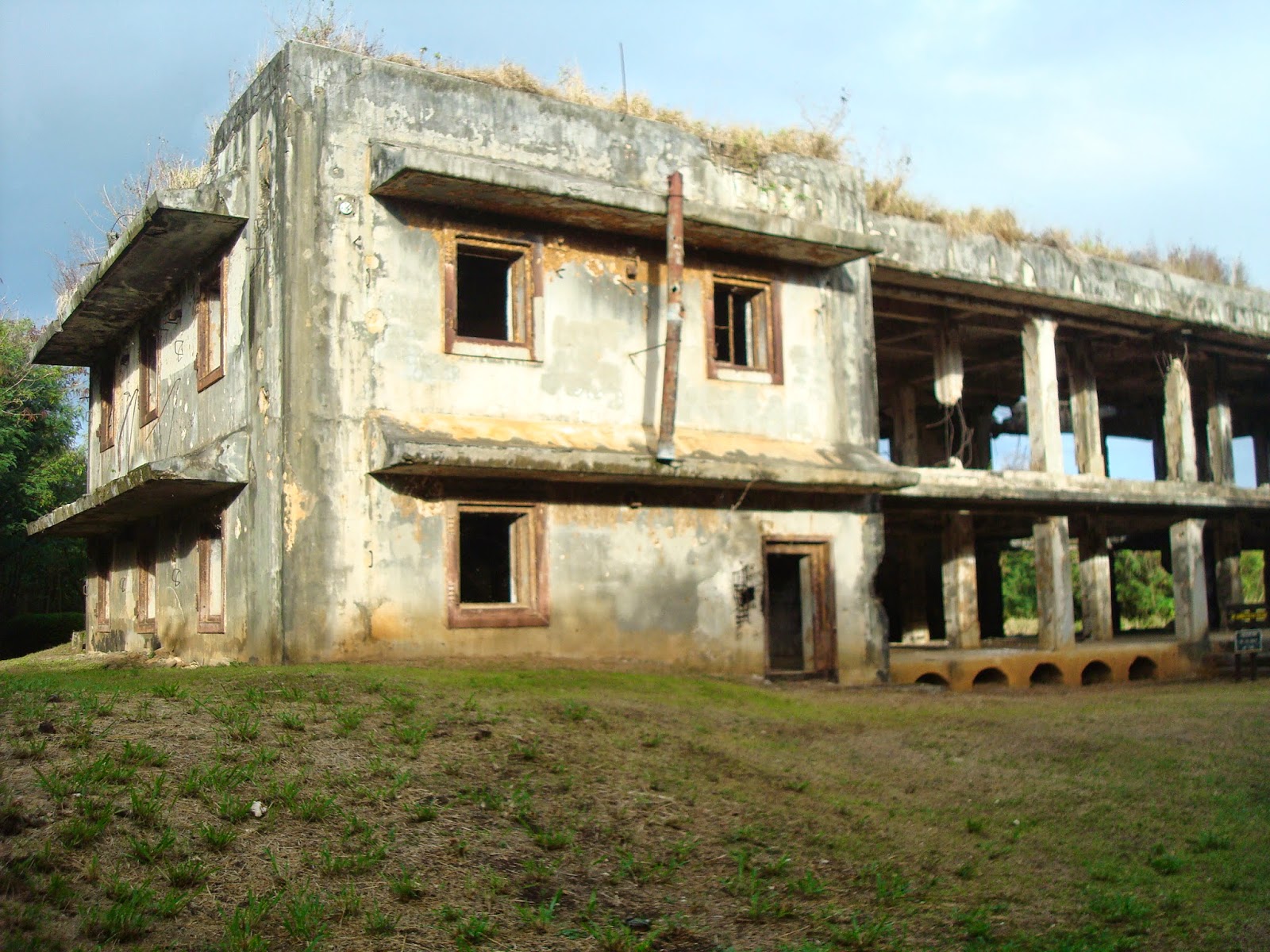
San Roque Church, Saipan

I was pastor of San Roque parish in Saipan for three wonderful years (1991-1994).  The village counted 800 people and it didn't take me long to know all the families.

There were four main clans in the village : Babauta, Camacho, Castro and Santos. Some people even had both names.

It was here that I got a real taste of how Chamorros love to give and use nicknames. Almost everyone was known by something other than their surnames.

Some were known by their spouses.  Some were known by clan nickname, their meanings lost in some cases.  Others were given nicknames based on funny attributes. Sometimes the nickname was not funny at all to the person labeled with it!

Sometimes the nickname applied to the whole family and sometimes just to one individual.  But it was very easy for that individual's children to start being called by that nickname.

Here is a partial list of the family or personal nicknames I found in San Roque.  When possible, I give an explanation.  In no particular order :

Paete' (de la Cruz).  This raises my curiosity, because there is a town in the Philippines called Paete, but this could just be coincidence.  It happens!

Puspus  (Babauta), This was the nickname of a man who, so the story goes, had an accident that affected his walking. He had to exert more effort walking and appeared to be pushing something in front of him.  So some people started to call him "pus pus" as in "push push."  Many Chamorros had a hard time saying the SH sound. Here's an example of Chamorros using an English word for a nickname.

Manggwa' (Santos).  The word is borrowed from the Japanese word manga or comics. Here you see the Chamorros change the pronunciation. This nickname applied to one person, but one person called this man's children "manggwalitos," or "little manggwa'." You see here the ingenuity of the Chamorros in inventing nicknames.

Kosinero (Pinaula).  "Cook."

Sando' (Camacho).  This applied to just one Camacho family.  Saipan has many Camachos.

Alabådo (Castro).  Applied to one man named Castro.  The word is Spanish and means "praised" but may come from the opening word in Spanish of the famous prayer "U ma tuna i sen såntos sakramenton i attat" which closes every devotion and prayer in Chamorro.  The original is the Spanish "Alabado sea el santisimo sacramento del altar."  In English, "Praised by the most holy sacrament of the altar."

Tuguini (Mafnas).  Supposedly, the father of this family could not say "taiguine," "this way."  Instead, he would say "tuguini" and thus a new nickname was born.

Sa'i (Babauta).  A very large clan.  The family story is that six fingers and toes (sais, shortened to sa'i) runs in this family.

Dågo (San Nicolas).  Yam.

Måtseliåno (Castro).  The ancestor of this clan of Castros was named Marceliano, pronounced Måtseliåno by Chamorros.

Marubong (Castro).  A branch of the Måtseliåno clan.  The word supposedly comes from a Japanese word for liquor.

Pandan (Santos).  Given to just one woman, but her children were often called by the same name.

Welang (Castro).  Applied to just one man.

Elis (Camacho).  Applied to just one man, whose wife was Elisabeth, shortened to Elis.

Pilot (Tudela).  Just one man was called this, but everyone referred to him and his family by this name.

Half-Inch (Santos).  Only one man had this nickname, but he had the same first and last names as another man in the village.  So people gave him the nickname "Half-inch" because he took very short steps when he walked.

As pastor, I frequently heard these nicknames.  Many times, I was not told to go see Santos or San Nicolas but rather to go see Pandan or Dågo.

Even I was given a nickname, which thankfully did not last.  For a while I was "Påle' Rambo."  But that's another story.

Thursday, May 22, 2014

ÅNTES YAN PÅ'GO


HAGÅTÑA
1920s

In the foreground is the barrio of San Ignacio, where the Spanish and South American officers and soldiers lived in the 1700s, many of them with Chamorro wives.  By the time this photo was taken, San Ignacio was home to a wide variety of Chamorros, of many racial mixes.  Though some considered San Ignacio the barrio of the upper class, the truth is that poor Chamorros also lived in San Ignacio, and upper class Chamorros also lived in other barrios of the city.

The Hagåtña church, plaza and Governor's Palace (palåsyo) were actually situated at the extreme north end of the city.  Beyond the church, in the direction of Minondo and Mongmong, there were hardly any houses.

To the west of the church was the barrio of San Nicolás.  North of that, going in the direction of Tamuning, was the barrio of San Antonio, the northern extent of the city. By the 1920s, these two barrios were heavily populated, more than San Ignacio.  By 1940, San Antonio was actually the most populated barrio of the city.

The rural plains of Tiyan, Barrigada, Ungåguan and other districts are visible; rich farming lands inhabited by 800+ people.  Mount Tuyan, now known as Barrigada Heights, is noticeable for its lack of housing, so different from today.

The main thing : Hagåtña was, at this time, a place people actually lived.  Over 10,000 of them by 1940, roughly half the entire island population.  Prior to that, when Guam counted just 10,000 people, about 80% of the people lived in Hagåtña.  Today, out of 160,000 people living on Guam in 2010, only 1,000 or just .63% of the island population live in the capital city!


HAGÅTÑA
2014
Ninety Years Later


Thursday, May 15, 2014

ILEK-ÑA SI PÅLE'


På'go na Damenggo, malago' yo' ta'lo hu kuentuse hamyo pot i mañaina yan famagu'on.
(This Sunday I want to speak to you again about parents and children.)

I derecho yan obligasion para u fan ma eduka i famagu'on, iyon-miyo i mañaina.
(The right and obligation to educate the children is yours, the parents.)

I mañaina ti debe na u ha sotta ha' na i eskuela la'mon enteramente nu i edukasion i famagu'on-ñiha.
(Parents should not leave entirely the education of their children up to the school alone.)

Mina' ma na' guaha eskuela pot para u fan ma ayuda ha' i mañaina;
(Schools are established only to assist the parents;)

lao åhe' ti pot para u ma chule' i tarean i saina.
(but not to take away the work of the parent.)

Este obligasion kåda saina i para u ma na' fanresibe i patgon-ña bula na kriånsa
(This obligation of each parent is to have their child receive a lot of upbringing)

gi asunton relihion yan i obligasion-ñiha gi relihion.
(in religious matters and in their religious obligations.)

Pot este na rason, i mañaina siha man obligao na u na' faneskuela i famagu'on-ñiha gi eskuelan Katoliko.
(For this reason, parents are obliged to school their children in Catholic schools.)

På'go yanggen gaige na imposipble ennao, i mañaina nesesita u ha tatago' i famagu'on-ñiha gi doktrina.
(Now if that is impossible, the parents must order their children to attend catechism class.)

Lao guennao ta'lo, i Pale' ti para u chule' i tarean i saina pot kosas relihion,
(But there as well, the priest is not to take over the work of the parent in religious matters,)

i gima' finene'na nai ma fa'någue i patgon.
(the home is where the child is taught first.)

Yanggen i patgon man lili'e man båba siha na ehemplo gi gimå'-ña,
(If the child sees bad examples in his home,)

i doktrina siempre ti u meggai na probecho para guiya.
(there won't be much benefit for him from catechism class.)

Sermon, 1965


Tuesday, April 29, 2014

MABINI, RICARTE AND DEL PILAR ON GUAM


"Insurrecto" was the term applied by the Spaniards, and later carried over by the Americans, to Filipino fighters for that nation's independence.

The Marianas were used by Spain as a place of exile for many of those who were captured.  Under the Americans, Guam continued to be used for this reason.


The most famous of those deported by the Americans was Apolinario Mabini, the "Brains of the Philippine Revolution."  Though a paralytic and already in U.S. custody, the Americans in Manila insisted he be deported because, even while in prison, he was able to secretly communicate with Filipino independence fighters operating in freedom.


Mabini at the Presidio (prison) of Asan.  They lived in tents at first, till a wooden building was complete. They were allowed to bring their man servants with them from the Philippines.

Another famous member was Artemio Ricarte.  Unlike the others, he never gave in to the demand that he swear an oath of allegiance to the U.S.  He eventually lived most of his life in Japan after his deportation.


ARTEMIO RICARTE


PIO DEL PILAR
Another high profile leader exiled to Guam


The New York Times
January 16, 1901


LIST OF FILIPINO PRISONERS SENT TO GUAM BY THE U.S.

Arriving January 1901 on the Rosecrans

Maximo Trias, Macario de Ocampo, Julian Gerona, Francisco de los Santos, Apolinario Mabini, Artemio Ricarte, Mariano Llanera, Pio del Pilar, Pablo Ocampo, Maximino Hizon, Esteban Consortes, Lucas Camerino, Pedro Cobarrubias, Mariano Barruga, Hermogenes Plata, Cornelio Requiestas, Fabian Villaruel, Juan Leandro Villarino, Jose Mata, Igmidio de Jesus, Alipio Tecson, Pio Varican, Anastacio Carmona, Lucino Almeida, Simon Tecson, Silvestre Legaspi, Juan Mauricio, Doroteo Espino, Bartolome de la Rosa, Norberto Dimayuga, Jose Buenaventura, Antonio Prisco Reyes, Joaquin Agramon, Eulogio Gonzalez.

The last two on the list were prisoners, but not political ones.

The following were servants to some of these high status men :

Maximiano Clamor, Adel Magcalas, Juan Guan, Faustino de los Santos, Prudencio Mabini, Aquilino Gandeza, Benito de Nuya, Jose Javier, Manuel Rivera, Antonio Bruno, Vicente Antequera, Ezequiel de los Santos, Juan Guasay

Prudencio was the brother of Apolinario Mabini. The prisoner Francisco de los Santos had a son and Pablo Ocampo had a brother-in-law in this group of servants or assistants.

The list does not include some Filipinos brought along as cooks.

There was actually one Spaniard among this group; Villarino, who fought for the Filipino side.

Arriving February 1901 on the Solace

This second group of political prisoners were all from the Ilocos region of northern Luzon.

Roberto Salvante, Marcelo Quintos, Jaime Morales, Pancracio Palting, Leon Flores, Gabino Domingo, Florencio Castro, Inocente Cayetano, Pedro Hernando, Pancracio Adiarte, Faustino Adiarte

TWO of these Filipino exiles remained on Guam.  Palting and Flores.  Both became prominent members of Guam society before World War II.

Except for these two who stayed on Guam, all the Filipino prisoners were sent back to the Philippines by 1903.


Filipino political prisoners boarding a vessel destined for Guam

Monday, April 28, 2014

A DIFFERENT KIND OF ACCIDENT


In English, we have all kinds of euphemisms and slang terms for being pregnant.  Some are considered offensive, and some are socially acceptable like, having "a bun in the oven," or having "one on the way."

But we have less slang terms for getting pregnant.  And they are usually highly offensive to some people.

In Chamorro, being pregnant is plain old mapotge'.  I am not aware of any slang terms in Chamorro for that.

But as far as getting pregnant is concerned, I have heard the slang term aksidente.  As you can guess, it simply means "an accident" or to "have an accident."

I have heard the word applied to an unwed woman who got pregnant outside of marriage.  Aksidente i palao'an.  The woman had an accident.

But I have also heard it applied to priests.

It is common knowledge among older Chamorros that some priests, as far back as Spanish times, fathered children.

In those days, such an occurrence was not spoken about openly.  It was obviously a sin, for both priest and woman, and thus it was not something to publicly acknowledge. 

But if the fact had to be stated, a Chamorro might say, "Ombre, sa' pot aksidente si påle'..."  "Well, because Father had an accident..."

Tuesday, April 22, 2014

JAPANESE TINIAN


On Tinian, sugar was king in the 1920s and 30s

One of the neatest things about Tinian is the abundance of Japanese-era remnants that exist there to this day.

Tinian was an entirely Japanese (and Okinawan and Korean) island in the 1920s and 30s.  The Japanese, who took over the Northern Marianas in 1914, found no permanent and rooted Chamorro community on the island.  Since the Spaniards deported the people to Guam in the 1700s, Tinian was inhabited only by seasonal Chamorro workers, and then later by a Carolinian community eventually relocated to Tanapag (Saipan), who tended the herds of cattle for the government and sometimes private entrepreneurs.  By 1914, all this had more or less been shut down and the island depopulated again, except for sporadic visits by Chamorros on Saipan to get beef or benefit somehow from the land.


Sugar Mill of the Nanyo Kohatsu Kaisha (NKK)

Taking advantage of Tinian's flat terrain, suitable soil and lack of a native population that owned land, much less used it themselves, the NKK sugar company expanded the sugar industry from Saipan to Tinian.  Eventually Tinian would be producing twice the amount of sugar Saipan was.


Though the fires burn, thanks to the battle, Tinian's sugar cane fields are still clearly visible


Tinian was mainly populated by Japanese, Okinawans and Koreans.  Chamorros amounted to a dozen or so males from Saipan and Rota doing temporary work on Tinian.  There wasn't even a Catholic priest assigned to Tinian during the Japanese period.
 
JAPANESE REMNANTS


Japanese Communications Center
now surrounded by cattle farms


The torii (gate) of the NKK Shinto Shrine

 
Japanese Air Administration building near the now-abandoned airstrips


Japanese Air Operations building in the area of the old airstrips

 
An office building of the NKK


The railroad tracks went through here, transporting sugar cane to the mill.

 
Tanks for raising unagi or fresh water eels.

 
The Sumiyoshi Shrine sits atop a hill thickly covered by vegetation.

 
The Shrine is still in good condition.

 
Another Shrine, on Mt Lasso, is not in as good a condition as Sumiyoshi.


Japanese Coastal Defenses, Chulu Beach

 
Japanese water pumps and tanks dot the island


What's left of the Japanese crematorium


Friday, April 11, 2014

KÅNTAN CHAMORRITA


Åntes de para un hånao
ai fangågågao lisensia!
Yanggen magof yo' un hånao;
yan ti magof yo' pasiensia.

(Before you leave,
oh, ask for permission!
If it pleases me, you will go;
if not, have patience.)


Stinging words that can be applied in more than one scenario.

One can imagine an adolescent boy who knows the girl of his love interest is momentarily at church or in another public place.  If he moves quickly enough, he can stroll by and converse with her.  But mother is keeping him on a short leash.

It could be a teenage girl, eyeing a potential boyfriend.

Perhaps it could even be from one lover to another, detaining the other to prove who rules in the relationship or perhaps to further enjoy the other's company.

The verse can mean many things, depending on the singer.

Thursday, April 10, 2014

MALESSO' IN 1941


SUCCESSES

Early 1941 was a good time for agriculture, the main occupation in Malesso'.   Tomatoes and corn in particular did very well.  More people were interested in farming and a record twenty-two plows were bought in Malesso' in just one month.

A type of pandanus called åkgak was receiving a lot of attention on Guam in the late 30s and early 40s.  Its production and use in weaving all kinds of things for home use and daily life was promoted by the government.  Jesus C. Barcinas, a teacher in Malesso', was a leader in åkgak production.  There was a big demand for woven products made of åkgak, especially by statesiders buying them as souvenirs.  It was a new way of making cash on Guam.

On the church front, Father Marcian was able to tear down what was left of the church which remained roofless after the typhoon of November 1940.  He was busy doing carpentry work to fix his residence and start building a new church.


DISAPPOINTMENTS

About the only sour note in Malesso' in June of 1941 was the no-show of the mañåhak fish.  They showed up but in such small numbers that the people could not salt any for future use.  What little mañåhak came was eaten up by the people.

Imagine this kind of life before December that year would change life forever.

Wednesday, April 9, 2014

HÅGAT "ELECTIONS" OF 1893


Village leaders in the Marianas during the Spanish period were not elected in the way we are familiar with today.  In the late 1800s, only a small group of village elite cast consultative votes, which could be (and often were) ignored by the Spanish officials who made the final determination.

These elite men were prior and current holders of various municipal positions such as gobernadorcillo (village chief), cabezas de barangay (neighborhood leaders), alguacil (a kind of justice officer) and others.

The local priest also had his say.  Sometimes this was even ignored by the Spanish Governor.

Keep in mind that in the Hågat (Agat) political unit, Sumay was included, as it was a more recent village and considered an annex of Hågat.  So some of the individuals mentioned below were residents of Sumay.

In the "election" of 1893 for the village of Hågat (Agat), the following were involved in the consultations :

Joaquin de San Nicolas
Vicente de Leon Guerrero Blanco
Juan Pineda
Jose de Rivera
Antonio de Leon Guerrero
Martin Taeñao
Francisco Sablan
Nicolas Diaz
Ignacio de la Cruz
Luis Blanco Carbullido
Guillermo Lizama
Felix Charfauros

When all these men voted for the highest post, that of gobernadorcillo , the top vote-getters were :

Vicente de Leon Guerrero Blanco
Luis Blanco Carbullido
Juan de los Reyes

Padre Jose Palomo, the first Chamorro priest, was acting pastor of Hågat at the time and weighed in on the matter, saying that Vicente Blanco could hardly speak Spanish, but that Luis Carbullido knew how to read, write and speak Spanish.

Unfortunately, this record doesn't show who was actually appointed gobernadorcillo of Hågat by the Governor.

Tuesday, April 8, 2014

I SIETTE NA SAKRAMENTON GUINAIYA

Wedding of Pedro & Maria Nauta, 1947

Talak hiyong gi bentanå-mo
Ya un ekkungok yo’ kerida mia
Ya bai hu kantåye hao på’go
nu i siette na Sakramento siha.

I finene’na i bautismo.
Hu tungo’ na esta hao matakpånge,
Tinakpånge hao as påle’
Sa’ guiya yo’ sumangåne.

I segundo konfitmasion.
Hu tungo’ na esta hao ma konfitma.
Guåho lokkue’ i na’ån-ho
Gi korason-mo bai hu fitma.

I tetset i penitensia.
Esta yo’ kumonfesat gi as påle’
Na hågo ha’ guinaiya-ko
Hågo ha’, kerida, båle.

I kuåtto i Santa Komunion
Nai un resibe i tataotao i Saina.
Un dia un chåhlao yo’ para asaguå-mo
Ya hågo para guåho må’gas na raina.

I kinto i Santos Oleos
annai ma palai i kumekematai.
Guåho lokkue’ siempre ma oleos  
Sa’ sin hågo chaddek yo’ måtai.

I mina’ sais i pumåle’.
Ni ngai’an para bai ma otdena.
Lao si påle’ hit  siempre ha na’ danña’;
I dinañå'-ta kalan fitme na kadena.

I mina’ siette i matrimonio.
Guiya på’go et mås malago’-ho.
Pinto’ Yu’us na hågo bai asagua
Ya bai kumple este na matago’-ho.

Pues estague siha i Sakramento
Ni ginen i Saina nai man pine’lo
Lao entre siha este ha’ malago’-ho
I åras, aniyo yan belo.

~~~Tinige' Påle' Eric


ENGLISH

THE SEVEN SACRAMENTS OF LOVE

Look out from your window
and listen to me my love
and I will sing to you now
about the seven Sacraments.

The first is baptism.
I know you are already baptized.
You were baptized by the priest
because he himself told me.

The second is confirmation.
I know you are already confirmed.
My name as well
I will write on your heart.

The third is penance.
I have already confessed to Father
that you alone are my love,
you alone darling are worthy.

The fourth is Holy Communion
when you receive the Body of our Lord.
One day you will take me as your husband
and you will be for me an exalted queen.

The fifth is Holy Anointing,
when they anoint the dying.
I, too, will be anointed
because without you I will quickly die.

The sixth is ordination.
I will never be ordained.
But Father will join us together,
our union like a strong chain.

The seventh is matrimony.
Now that is what I most want.
It is God's will that I marry you,
and I will accomplish this, my task.

So these are the Sacraments,
which were established by the Lord.
But among them this only do I want :
the coins, ring and veil.*

* A Spanish tradition continued among Chamorros is the blessing and exchange of coins, symbolizing the husband's promise to provide for the family, and the veil which goes over both bride and groom (her head, his shoulder) symbolizing their unity.

Monday, April 7, 2014

ÅNTES YAN PÅ'GO


ÅNTES
1950s

Family Shoe Store was the first shoe store on Guam.  Shoes, of course, were sold in other stores before and after the war, but this store was exclusively for shoes.

It was opened around 1950 by husband and wife Jose (Ton Nene) and Ana Franquez Dueñas. 

The upper floor was originally storage space but in the early 1970s it was rented to my aunt, Sally Limtiaco, as a beauty salon (called Princess Coiffure). 

Route 4 at the time was just two lanes and there were no side walks as yet.


1980s
 
The store closed in 1983 and eventually became the first offices of the newly-created Catholic Social Services.
 
Route 4 is widened and now has sidewalks.


PÅ'GO
2014
 
The land was eventually leased to the Bank of Guam and the old building torn down to make way for the building of the bank's headquarters.  Route 4 now has a median island or divider.

Thursday, April 3, 2014

FINO' I MAN ÅMKO' : MATUBAN NIYOK


Sais åños despues de umassagua i dos, ha sodda' un palao'an na primu-ña mina' kuåttro grådo i asaguå-ña.
(Six years after the two married, a woman found out that her husband was her fourth cousin.)

Mampos inestotba i palao'an pot este, ya humånao sekretamente guato gi bihå-ña para u famaisen kao guaha håfa båba bidan-ñiha yan i asaguå-ña.
(The woman was exceedingly disturbed on account of this, and secretly went to her grandmother to ask if she and her husband had done anything wrong.)

Ilek-ña i bihå-ña, "Hagas hu tungo' na parientes-ta i asaguå-mo, lao hu konsiente para un asagua gue', sa' esta mina' kuåttro påpa' i matuban niyok."
(Her grandmother said, "I knew back then that your husband was our relative, but I agreed for you to marry him, because he was four grooves down the coconut tree.")

MEANING

Tuba, we mostly all know, is the fermented drink made from the sap of the coconut tree.

But matuba can mean the cut grooves on the trunk of the coconut tree (niyok) to help people climb it.  There is a connection between the cuts and the drink because the sap is collected by cutting the flower of the tree.

In the old days, one could see many coconut trees with these slashed grooves on the trunk.  Nowadays, as fewer people in our islands climb the trees to make use of them, it is harder to find trees that are matuba.

Older people thus used the symbol of the grooves of the coconut tree to express distance from the top.  The lower the groove, the more distance from the top.  By analogy, this could be applied to distances among blood relations.


Wednesday, March 26, 2014

HINENGGEN I MAN ÅMKO' : RAIN ON NEW YEAR'S


Not all folk beliefs are consistent.

People are people, and come up with a variety of beliefs that are the same in some ways, and differ in others.

Take for example rain.

Some believe that if it rains on Christmas day, it will rain on and off the following year.  There will be no true "dry season" or fañomnagan.

But others say this :

Yanggen uchan gi Åño Nuebo, siempre u templao entero i sakkan.

If it rains on New Year's Day, the whole year will be temperate.

Templao means that the year will be evenly regulated, with no extremes.  There will be rain and shine evenly distributed all times of the year.

Tuesday, March 25, 2014

SI KANABICHI


My informant was in his early teens when the Japanese invaded Guam in December of 1941.  He prefers to remain anonymous.

When the people had to vacate Hagåtña when war began, his family headed north to Yigo where the family had farm land.

I asked him about his Japanese school teacher in Yigo.

"Marino.  Si Kanabichi na'ån-ña." 
("He was a sailor.  Kanabichi was his name.")

"Kao maolek pat båba kostumbre-ña?"  I asked.
("Were his ways good or bad?")

"Maolek."
("Good.")

"Ti ha patmåda hamyo, pat ti ha anña' hamyo?"
("He didn't slap you, or beat you up?")

"Åhe', Påle'.  Tåya' bidan-måme lokkue' ni para in merese man ma anña'!"
("No, Father.  We didn't do anything either to deserve to be beaten up!")

Then he grinned a little, looked at me and said,

"Påle', ti todo Chapanis man båba."
("Father, not every Japanese was bad.")

Monday, March 24, 2014

FAMILIA : TAIAÑAO TAIEÑAO


In the village of Hågat there has been, for many years, a small number of families who go by the last name Taiañao or Taieñao.

They really are the same name, but since people in the old days spelled names the way it sounded to them, slightly different spellings came about. 

The root word for this Chamorro name is å'ñao.  We see it in words like ma'å'ñao, which means "fearful."  But that meaning came later.  Å'ñao means "victory, domination, subjugation."  Ma'å'ñao meant someone or something was dominated, subjected, beaten in a fight.  Naturally, this was something fearful so ma'å'ñao also came to mean "fearful," or perhaps "overcome with fear of subjection."

A'a'ñao means someone who is victorious and who dominates another.  The "a'a" is then changed into "ak" and "a'a'ñao" becomes akñao, meaning someone who is victorious.

Tai means "lacking."  So Taiañao/Taieñao means "invincible, unconquerable" but also fearless about being dominated, so intrepid.

The entire Taiañao/Taieñao family seems to be descended from one man with that surname, one Alejandro Taiañao from Hågat.  He was married to a Maria Charfauros.

Their children were Mariano and Martin.  Martin (born 1844) married Maria San Nicolas Quintanilla, had a number of children, including sons, in the 1860s and 70s and from them the family continued to this day.

EÑAO

To make matters more interesting, also in Hågat, there was the Eñao family.  This family did not continue to our times due to lack of males to carry on the name.  Eñao could actually be Añao, but perhaps not.
 
TAIAÑAO, MAAÑAO, TAIMAÑAO

So you see how there are three Chamorro families, the Taiañao from Hågat, the Maañao from Asan and the Taimañao from Luta, and all three names are derived from the root word å'ñao.