Tuesday, April 14, 2020

SAMOAN CHIEF ESCAPES FROM SAIPAN TO GUAM


I'IGA PISA OF SAMOA


I'iga Pisa was a Samoan noble in status and in personality. People described him as pleasing and excellent in his speech and demeanor, besides being tall and regal.

But he lived during German colonial times and was all for Samoan independence. In 1908, tension between Samoan chiefs and the German colonial heads heated up as the chiefs saw their power slipping away. Samoan resisters organized and called themselves Mau a Pule, mau being a Samoan word meaning "resolve" or "unwavering." In 1909, the Germans decided to exile leading members of Mau a Pule far across to the other side of the Pacific, to another island the Germans controlled, Saipan. I'iga Pisa was one of those deported there.


FROM SAMOA TO SAIPAN
Both under German control

Just five years later, the Germans who had imprisoned him were themselves imprisoned when the Japanese took over Saipan in 1914. Japan had no quarrel with Samoans, but finding them transportation to Samoa would be more of a problem. Pisa also found out that his part of Samoa was passed from German control to New Zealand control. The German language he had started to learn in Saipan was now useless to him. He had to learn English if he were to return to Samoa and be of any use in the struggle for Samoan independence.


ALL BY HIMSELF IN A DUGOUT CANOE

Where could he learn English? Guam! Guam was just 136 miles away and he knew that Guam was in American hands. How would he get there? Most of the time he was in Saipan, Pisa had used a small dugout canoe for fishing. He made a paddle and on one night in 1915, he set off for Guam all by himself in his small canoe. He passed Tinian and then was out on the high seas. When he lost sight of all land, he started to become anxious. He had no compass but he knew about the southern cross and he knew, from the rising and setting of the sun, where south was; south where Guam lay!

Fatigue started to get the best of him and, as he nodded himself to sleep, the paddle fell from his hand into the sea. But, he looked up and saw Luta (Rota). He made it on land and crashed asleep in a cave. Some Chamorros found him and gave him food and water but, most of all, kept his secret. Even when a ship from Saipan came looking for him, the Chamorros told them that Pisa had rowed away for Saipan already. The Chamorros on Luta urged him not to row his canoe to Guam; it was too dangerous they said. But Pisa said he had paddled even longer, from Saipan to Luta and he survived. The Chamorros on Luta then relented. With a brand new paddle, Pisa set off for Guam, which he could already see at a distance when he was on the high ground in Luta.


I'IGA PISA'S ROUTE FROM SAIPAN TO GUAM
All by himself in a small, dugout canoe


FINALLY ON GUAM

It was around 1PM when Pisa made landfall on a deserted beach in northern Guam. He fell asleep and was later awakened by the sound of a man moving about. It was a Chamorro, who seemed to be slightly drunk from tuba, which Pisa knew from Saipan. The Chamorro was friendly; perhaps, in part, thanks to the liquor. The Chamorro offered him food. The Chamorro had no idea what Samoa was and was more satisfied thinking that Pisa was a Carolinian as the Chamorros were used to seeing. The Chamorro believed it would be best for Pisa to stay at his ranch and feed his pigs.

Pisa finally reached Hagåtña with his new Chamorro friend and insisted on going straight to the authorities. He marveled at Hagåtña's clean and tidy layout; at automobiles, which had not come to Samoa or Saipan yet, and electric lights. Pisa had with him a letter of recommendation his German school teacher in Saipan had written. Governor William J. Maxwell had a German-speaking member of the Marine band come and translate it. It made a positive difference since Pisa could not explain himself in English, though he could converse a bit in Chamorro to the Chamorro guards.


QUESTIONED BY THE GOVERNOR

The following day, Pisa was sent to be questioned by the Governor. Maxwell had José Torres Roberto, a young government clerk, act as an interpreter. Roberto would use Chamorro with Pisa, but it turned out that Pisa didn't know enough Chamorro to communicate at length. So the German-speaking band member was called again, since Pisa had a better command of German.

Luckily for Pisa, the German captain of the SMS Cormoran, hiding in Apra Harbor from the Japanese, was able to inform Governor Maxwell about Pisa's identity and why he ended up in Saipan. Maxwell did not think Pisa should go to Guam's government schools to learn English. The Governor would find some other way. Not long after, Pisa was put to work at the government printing office as a type setter. That way he would learn the English language, putting the letters together to print out bulletins in English. People he associated with, both inside and outside work, spoke to him in English and helped him learn that way, too. Maxwell decided Pisa should wait until the war was over and see who truly got control over Samoa before Pisa returned.


GOVERNOR WILLIAM J. MAXWELL


ON TO HONOLULU THEN SAMOA

Well, World War I eventually ended in 1918. Germany lost that war and New Zealand's control over most of Samoa was confirmed. But Pisa took the advice of the new American Governor of Guam to wait till a Navy transport could take him to Honolulu for free, since he had worked for the Naval Government for four years. The Governor also gave Pisa a letter of recommendation for the Navy heads in Pearl Harbor and, sure enough, Pisa got a job with the Navy in Hawaii and then later at a private printing company.

But Pisa's family wanted him back in Samoa, and so did the New Zealand colonial government there. Pisa had a good knowledge of English by now and would be useful in Samoa's governmental offices. His congenial personality won him man friends in Honolulu who were sad to see him go. His departure even made the Hawaii newspapers. He returned to Samoa and worked for the Department of Native Affairs until 1942.

He passed away in 1965.

Memoirs of I'iga Pisa, Marianas Variety, Saipan, October 13, 20, 27, 1972.


VERSIÓN EN ESPAÑOL
(Traducida por Manuel Rodríguez)


JEFE SAMOANO ESCAPA DE SAIPAN A GUAM.

I'iga Pisa era un noble samoano en status y personalidad. La gente lo describió como agradable y excelente en su discurso y comportamiento, además de ser alto y regio.
Pero vivió durante la época colonial alemana y él anhelaba la independencia de Samoa. En 1908, la tensión entre los jefes samoanos y los jefes coloniales alemanes aumentó cuando los samoanos vieron que su poder se desvanecía. La resistencia samoana se organizó y se llamó a sí misma Mau a Pule, “mau” es una palabra samoana que significa "resolución" o "inquebrantable". En 1909, los alemanes decidieron exiliar a los principales miembros de Mau a Pule al otro lado del Pacífico, a otra isla que los alemanes controlaban, Saipán. I'iga Pisa fue uno de los deportados allí.

Solo cinco años después, los alemanes que lo habían encarcelado fueron también hechos prisioneros cuando los japoneses se apoderaron de Saipán en 1914. Japón no discutió con los samoanos, pero encontrarles transporte a Samoa sería un problema mayor. Pisa también descubrió que parte de Samoa había pasado del control alemán al control de Nueva Zelanda. El idioma alemán que había comenzado a aprender en Saipán ahora era inútil para él. Tenía que aprender inglés para regresar a su país y ser útil en la lucha por la independencia de Samoa.

TODO POR SÍ MISMO EN UNA CANOA DUGOUT

¿Dónde podría aprender inglés? ¡Guam! Sabía que Guam estaba en manos estadounidenses. ¿Cómo llegaría él allí? La mayor parte del tiempo que estuvo en Saipán, Pisa había usado una pequeña canoa para pescar. Hizo una paleta y, una noche de 1915, se dirigió solo hacia Guam en su pequeña canoa. Pasó junto a Tinián y luego salió a alta mar. Cuando perdió de vista tierra, comenzó a ponerse ansioso. No tenía brújula, pero conocía la cruz del sur y sabía, por la salida y puesta del sol, dónde estaba el sur; el sur donde yacía Guam.

La fatiga comenzó a arrebatar lo mejor de él y, mientras asentía para dormir, la paleta cayó de su mano al mar. Pero, levantó la vista y vio Rota. Llegó a tierra y se durmió en una cueva. Algunos chamorros lo encontraron y le dieron comida y agua pero, sobre todo, mantuvieron su secreto. Incluso cuando un barco de Saipán vino a buscarlo, los chamorros les dijeron que Pisa ya había regresado a Saipán. Los chamorros de Rota lo instaron a no continuar su viaje en canoa hacia Guam; Era demasiado peligroso, le dijeron. Pero Pisa les respondió que había remado aún más, desde Saipán hasta Rota y estaba vivo. Los chamorros de Rota cedieron entonces. Con una nueva paleta, Pisa partió hacia Guam, que ya había podido ver desde la distancia cuando había subido a la parte elevada de Rota.

FINALMENTE EN GUAM
 
Era alrededor de la 1:00 p.m. cuando Pisa tocó tierra en una playa desierta en el norte de Guam. Se durmió y luego fue despertado por el sonido de un hombre moviéndose. Era un chamorro, que parecía estar un poco borracho de tuba, bebida que Pisa conocía de Saipán. El chamorro era amigable, en la forma en que el licor a menudo hace a un hombre. El chamorro le ofreció comida; no tenía idea de qué era Samoa y estaba más satisfecho pensando que Pisa era carolino como los chamorros estaban acostumbrados a ver; y el chamorro creía que sería mejor para Pisa quedarse en su rancho y alimentar a sus cerdos.

Pisa finalmente llegó a Hagåtña con su nuevo amigo chamorro e insistió en ir directamente a las autoridades. Se maravilló de la disposición limpia y ordenada de Hagåtña; con automóviles, que aún no habían llegado a Samoa o Saipán, y luces eléctricas. Pisa tenía con él una carta de recomendación que su maestro de la escuela alemana en Saipán había escrito. El gobernador William J. Maxwell hizo que un miembro de habla alemana de la banda naval viniera y lo tradujera. Hizo una discriminación positiva. Porque, hasta entonces, Pisa no podía explicarse en inglés, aunque podía conversar un poco en chamorro con los guardias.

INTERROGADO POR EL GOBERNADOR

Al día siguiente, Pisa fue enviado para ser interrogado por el gobernador. Maxwell hizo que José Roberto Torres, un joven empleado del gobierno, actuara como intérprete. Roberto usaría el chamorro con Pisa, pero resultó que Pisa no conocía lo suficientemente el idioma para comunicarse. Entonces llamaron nuevamente al miembro de la banda, de habla alemana, porque Pisa tenía un mejor dominio del alemán.

Afortunadamente para Pisa, el capitán alemán del SMS Cormoran, escondido de los japoneses en la Bahía de Apra, pudo informar al gobernador Maxwell sobre la identidad de Pisa y por qué terminó en Saipán. Maxwell no creyó que Pisa debiese ir a las escuelas gubernamentales de Guam para aprender inglés. El gobernador encontraría otra forma. No mucho después, Pisa fue puesto a trabajar en la imprenta del gobierno como tipógrafo. De esa forma aprendería el idioma inglés, juntando las letras para imprimir boletines en inglés. Las personas con las que se asociaba, tanto dentro como fuera del trabajo, le hablaban en inglés y también lo ayudaban a aprender de esa manera. Maxwell decidió que Pisa debería esperar hasta que terminara la guerra y ver realmente quién tenía el control sobre Samoa, antes de que Pisa regresara.

EN HONOLULU, LUEGO SAMOA

Bueno, la Primera Guerra Mundial finalmente terminó en 1918. Pero Pisa escuchó el consejo del nuevo gobernador estadounidense de Guam para esperar hasta que un transporte de la Marina pudiera llevarlo a Honolulu de forma gratuita, ya que había trabajado para el Gobierno Naval durante cuatro años. El gobernador también le dio a Pisa una carta de recomendación para los jefes de la Marina en Pearl Harbor y, efectivamente, Pisa consiguió un trabajo con la Marina en Hawai y luego en una imprenta privada.

Pero la familia de Pisa lo quería de regreso en Samoa, y también el gobierno colonial de allí. Pisa tenía un buen conocimiento del inglés y sería útil en las oficinas gubernamentales de Samoa. Su personalidad agradable le ganó amigos en Honolulu que estaban tristes de verlo partir. Su marcha incluso llegó a los periódicos de Hawai. Regresó a Samoa y trabajó para el Departamento de Asuntos Nativos hasta 1942. Falleció en 1965.


Monday, April 6, 2020

I MAMOPBLE


Homelessness is not just a modern social problem.

Of course it is much worse today than in the past. But the historical record shows that not everyone had a comfortable life in the "good old days." The fact that life is not a bed of roses applies to all ages in history.

Two brothers were brought to the attention of the court in 1911 because they had no visible means of support.

The court called in witnesses from Inalåhan to provide information about the livelihood of Vicente and Marcelo. In a small village like Inalåhan, residents would have seen the two brothers on a daily basis and could provide accurate knowledge about the two brothers' situation in life.

According to the witnesses, Vicente had no property of any kind and thus no way to raise chickens, cows, pigs nor land on which to grow crops. He would fish in the sea, but what he caught wasn't enough for sustenance because he had only a sharp iron rod with which to stab a single fish when the tide was low. What he could catch would be enough for a day or two at most, and that was only when he had luck fishing that day. No mention is made where he lived, as opposed to his brother, so we can assume Vicente was homeless, sleeping wherever he could find a spot. One night here, another night somewhere else.


VICENTE'S ONLY WAY OF FISHING

His brother Marcelo also had no land, animals nor fishing nets, but he did have a humble hut on government property which he was allowed to use. He was also allowed to farm a piece of land belonging to someone else but apparently Marcelo did not make much of a living from that opportunity.

When it was lemmai (breadfruit) or gådo' (wild yam) season, they would help themselves from trees or fields which were more or less "public." At times they would also eat other yams - nika and simarón - and also fadang (federico nut). They rarely ate corn or rice, the main staples of food at the time.

Both men were described as able-bodied and healthy, but having an aversion to manual work and a love for alcohol.

Because of their poverty, the two brothers were suspected of stealing things from their fellow Inalåhan villagers.

The sad thing was that both brothers had wives and several children each. Imagine how meager the children's daily meals were, unless, as sometimes happened, the mother and children left the man to live with her relatives.

The two brothers could be blamed for their laziness and intemperance, if they were truly guilty of these. But the fact that neither of them had any land was probably due to their parents' lack of land to pass on. Why was this so? Vicente and Marcelo were born in Inalåhan and so were their parents. This family had deep roots there. They must have had land at one time. How did they lose it? This has to be part of the reason why Vicente and Marcelo were so destitute.


RANCH SCENE NEAR INALÅHAN
at the time Vicente and Marcelo lived


VERSIÓN EN ESPAÑOL
(Traducida por Manuel Rodríguez)


LOS POBRES

La falta de vivienda no es solo un problema social moderno.

Por supuesto, es mucho peor hoy que en el pasado. Pero el registro histórico muestra que no todos tenían una vida cómoda en los "buenos viejos tiempos". El hecho de que la vida no sea un lecho de rosas se aplica a todas las épocas en la Historia.

Dos hermanos llamaron la atención de la Corte en 1911 porque aparentemente no tenían ingresos.
El Tribunal llamó a testigos de Inalåhan para proporcionar información sobre el sustento de Vicente y Marcelo. En un pequeño pueblo como Inalåhan, los residentes habrían visto a los dos hermanos diariamente y podrían proporcionar un conocimiento preciso sobre la situación de los dos hermanos en la vida.

Según los testigos, Vicente no tenía propiedades de ningún tipo y, por lo tanto, no tenía forma de criar pollos, vacas, cerdos ni tierras para cultivar. Pescaría en el mar, pero lo que pescaba no era suficiente para sustentarse porque solo tenía una barra de hierro afilada con la que capturar a un solo pez cuando la marea estaba baja. Lo que podría atrapar sería suficiente para un día o dos como máximo, y eso era solo cuando tenía suerte pescando ese día. No se menciona dónde vivía, a diferencia de su hermano, por lo que podemos suponer que Vicente no tenía hogar, durmiendo donde pudiera encontrar un sitio. Una noche aquí, otra noche en otro lugar.

Su hermano Marcelo tampoco tenía tierra, animales ni redes de pesca, pero tenía una humilde cabaña en propiedad del gobierno que se le permitía usar. También se le permitía cultivar un terreno que pertenecía a otra persona, pero aparentemente Marcelo no se ganaba la vida de ese modo.

Cuando era la temporada de lemmai (fruta del pan) o gådo '(ñame silvestre), se servían de árboles o campos que eran más o menos "públicos". A veces también comían otros ñames - nika y simarón - y también fadang (nuez federico). Raramente comían maíz o arroz, los principales alimentos básicos en ese momento.

Ambos hombres fueron descritos como aptos y sanos, pero que tenían una aversión al trabajo manual y sí un amor por el alcohol.

Debido a su pobreza, los dos hermanos eran sospechosos de robar cosas de sus vecinos de Inalåhan.

Lo triste fue que ambos hermanos tenían esposas y varios hijos cada uno. Imagine cuán escasas eran las comidas diarias de los niños, a menos que, como sucedía a veces, la madre y los niños dejaran al hombre para vivir con sus familiares.

Los dos hermanos podrían ser culpados por su pereza e intemperancia, si fueran realmente culpables de esto. Pero el hecho de que ninguno de ellos tuviera tierra probablemente se debió a la falta de bienes de sus padres para transmitir. ¿Por qué fue así? Vicente y Marcelo nacieron en Inalåhan y también sus padres. Esta familia tenía profundas raíces allí. Debieron haber tenido tierra alguna vez. ¿Cómo la perdieron? Esto tiene que ser parte de la razón por la cual Vicente y Marcelo eran tan indigentes.


Friday, April 3, 2020

"I GOTTA BE ME"


Believe it or not, that picture above is the signature of a woman signing her name Juana Rojas.

Even back in 1911, Guam had its share of eccentrics and free-spirited people, perhaps having a flair for artistic expression.

Juana, whose full name was Juana Rojas Díaz, according to the Spanish method of placing one's father's surname first, followed by the mother's, certainly had a unique way of signing her name.

To make it clearer that she was signing herself "Juana Rojas," let's look at this version :


Her first J seems recognizable, although some might think it's a Y.

Her style follows the Spanish fashion and of her time, the late 1800s.

She writes her R backwards. This was definitely unconventional by all standards at the time.

And her final S seems odd to us but may have been recognizable to Spaniards in the 1800s as an S.

Her As, which appear three times in her signature, are also unique but at least consistent. Even the non-conformist often conforms to his own rules.


I would have liked to have meet Juana. Did she have a flair in everything she did? Did she stand out in her attire? Did she add an unusual ingredient to her natiya (latiya)? Who taught her how to sign her name? And did she quarrel with whoever taught her?


VERSIÓN EN ESPAÑOL
(Traducida por Manuel Rodríguez)


TENGO QUE SER YO

Lo creamos o no, la imagen de arriba es la rúbrica de una mujer que firma su nombre, “Juana Rojas”.

Incluso en 1911, Guam tenía su propia cuota de gente excéntrica y de espíritu libre, tal vez con un don para la expresión artística.

Juana, cuyo nombre completo era “Juana Rojas Díaz”, según el método español de colocar primero el apellido del padre, seguido del de la madre, ciertamente tenía una forma única de firmar su nombre.

Para dejar claro que ella se estaba firmando a sí misma, "Juana Rojas", veamos la segunda imagen:

Su primera J parece reconocible, aunque algunos podrían pensar que es una Y.

Su estilo sigue la moda española y de su época, a fines del siglo XIX.

Ella escribe su R al revés. Esto definitivamente no era convencional para todos los estándares en ese momento.

Y su S final nos parece extraña, pero puede haber sido reconocible por los españoles en el siglo XIX como una S.

Sus As, que aparecen tres veces en su firma, también son únicas pero al menos consistentes. Incluso el inconformista a menudo se ajusta a sus propias reglas.

Me hubiera gustado conocer a Juana. ¿Tenía ella un don en todo lo que hacía? ¿Se destacó en su atuendo? ¿Agregó un ingrediente inusual a su natiya (latiya)? ¿Quién le enseñó a firmar su nombre? ¿Y se peleó con quien le enseñó?

Monday, March 30, 2020

BORN IN PAGAN


PAGAN IN THE 1800s

Around 1860 or so (we can't be totally sure when because he gave different ages for himself through the years), a Chamorro-American boy was born on the island of Pagan.

In those days, all the Marianas were one political unit. Before the Spaniards came, all our islands, though not governed by a single king, chief or maga'låhe, were nevertheless one Chamorro homeland. There were no borders between our islands. Only in 1898 did the Americans take Guam alone, separating it from the rest of the Marianas.

In the 1850s, people believed much money could be made in Pagan and in some of the other northern islands, especially in the copra trade.

Chamorros and Carolinians from Guam and, later on, Saipan and a few from Luta and Tinian, went up to Pagan, employees of several companies that won rights from the government to make copra in Pagan. These efforts lasted a few years then shut down, everyone returning to their home islands. Only till much later did a small, permanent community of Chamorros and Carolinians form on Pagan.

Thomas San Nicolás Payne was the son of an American (so he says in the 1920 census) and a Chamorro mother, it seems, by the last name of San Nicolás. I wouldn't be surprised if father Payne went up to Pagan, wife in tow, to work on the copra plantations there and returned to Guam after a short while.

In a court case in 1911, Payne testified as a witness and gave this information about himself. Note that even in 1911 Chamorros were still calling themselves in the Spanish fashion, stating their father's surname first, then their mother's.


Payne was married to Ana Ulloa Aguon (familian Makaka') and his descendants live to this day.


Thomas San Nicolás Payne's signature in 1911


VERSIÓN EN ESPAÑOL
(Traducida por Manuel Rodríguez)


NACIDO EN PAGAN

Un niño chamorro-americano nació en la isla de Pagan, alrededor de 1860 (no podemos estar totalmente seguros de cuándo, debido a que él se dio diferentes edades a lo largo de los años).

En aquellos días, todas las Marianas eran una unidad política. Antes de la llegada de los españoles, todas nuestras islas, aunque no estaban gobernadas por un solo rey, jefe o maga'låhe, eran, sin embargo, una patria común para los chamorros. No había fronteras entre nuestras islas. No fue hasta 1898 cuando los estadounidenses tomaron Guam separándola del resto de las Marianas.

En la década de 1850, la gente creía que se podía ganar mucho dinero en Pagan y en algunas de las otras islas del norte, especialmente en el comercio de la copra.

Chamorros y carolinos de Guam y, más tarde, Saipan y algunos de Luta y Tinian, se acercaron a Pagan, empleados en varias compañías que obtuvieron los derechos del gobierno para la copra. Estos esfuerzos duraron unos años y luego se cerraron, todos regresaron a sus islas de origen. Fue mucho más tarde cuando se formó una pequeña comunidad permanente de chamorros y carolinos en Pagan.

Thomas Payne San Nicolás era hijo de un estadounidense (eso dice en el censo de 1920) y de una madre chamorra, al parecer, por el apellido de San Nicolás. No me sorprendería que el padre, Payne se hubiera acercado a Pagan, para trabajar en las plantaciones de copra y regresara a Guam después de un tiempo.
En un caso judicial en 1911, Payne testificó como testigo y dio esta información sobre sí mismo. Tengamos en cuenta que incluso en 1911 los chamorros todavía se llamaban al estilo español, indicando primero el apellido de su padre, y luego el de su madre.

Tomás Payne San Nicolás. ¿Cuántos años tiene? 54 años. ¿Está usted soltero o casado? Casado. ¿Dónde nació usted? Nací en la Isla de Pagan, Marianas. ¿Dónde tiene su residencia? En Agaña, Guam, Marianas.

Friday, March 27, 2020

LACHE HININGOK-ÑA


Humånao si José para u ali'e' yan i mediku-ña.

Mediko : José! Håfa na dies libras hao mås makkat ke ni ma'pos na biåhe. Hu tågo' hao para un "exercise!"

José : Ai lokkue'. Pine'lo-ko, Doc, na ilek-mo "Extra rice."


José went to his doctor's appointment.

Doctor : Jose! Why are you ten pounds heavier than the last time. I told you to exercise!

José : Oh dear. I thought, Doc, you said, "Extra rice."


Wednesday, March 25, 2020

MOCKING THE GI SENGSONG


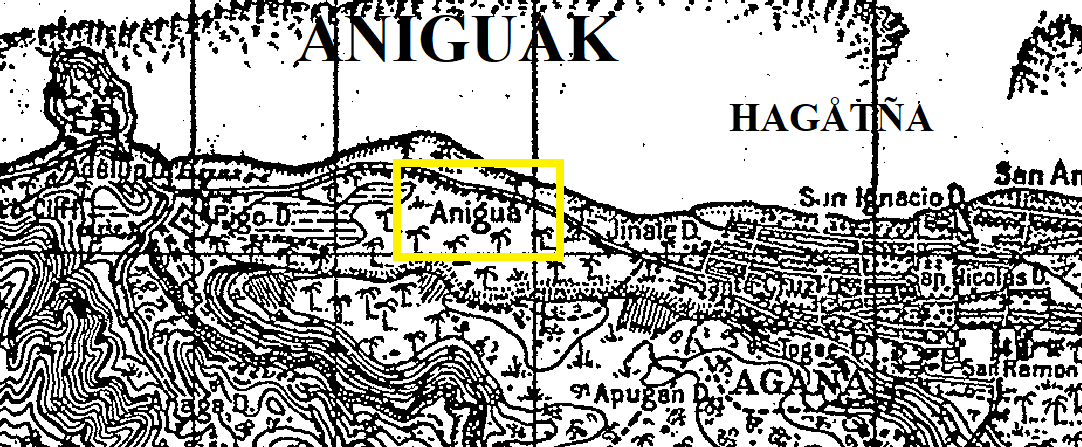
We're used to thinking of Aniguak as just a section of Hagåtña and today it legally is.

But not so in the old days.

At one time, Aniguak had its own civil officials under the Spanish government. As one can see in the map above, made around 1913, there was actual empty space between Aniguak and Hagåtña in those days and before.

But the separation was not only legal or geographical. It was also social.

Despite the fact that we resent being looked down on for coming from the Marianas, many Chamorros have no problem marking other Chamorros because they come from a different village, island and even social class.

For Chamorros in Hagåtña, where 2/3 of the entire island lived for a lot of the time, everyone on Guam who lived outside of the capital city was GI SENGSONG.

GI means "at" and in this sense "from." Sengsong is from SONGSONG, meaning "village."

Additionally, people could be called after the village or island they were from. Someone from Luta (Rota) was called Gi Lita.

Someone from Yoña was Gi Ye'ña. From Sumay was Gi Simay. And so on.


It's also the case that people from Hagåtña were called by others Gi Hagåtña.

In many cases, people didn't mean any insult at all when calling someone Gi Lita or Gi Simay or what have you. But people from those places could be sensitive and be offended by being called such because, at times, it was meant as a put-down.

People from the rural villages and other islands sometimes felt judged as "lower" in status by Hagåtña people.

In 1911, we see a case where someone from the villages was labeled such, and it was clearly meant as a put-down.

Ana and Manuel had neighboring farms in Yigo, and they would butt heads periodically. Stray cows wandering into the other's fields, for example. Ana was from Hagåtña, and Manuel was from Aniguåk. Even though Aniguåk was literally a five-minute walk from the edge of Hagåtña, the social distance was greater than several hundred yards.

In one verbal argument between the two, Ana said,

"Ai ke puñetero. På'go un gi Aniguåk yo' u na' kieto gi lugåt-ho."
("What a nuisance. Now someone from Aniguak is going to put me in my place.")

"Tatpalo i taotao Aniguåk."
("Aniguak people are useless.")

Manuel said in reply :

"Hågo maolek ni gi Hagåtña; po'lo ha' yo' yan i gi Aniguåk-ho."
("You are good who are from Hagåtña; leave me be and my being from Aniguåk.")

Manuel showed, by his remark, that he was totally comfortable being from Aniguåk.

Wednesday, March 18, 2020

A TASTE OF THE OCCUPATION


JAPANESE SAILORS IN HAGÅTÑA
during the Occupation 1942 or 1943


Some of the very hardships we are enduring now that the corona virus has made its appearance on Guam are the same hardships our elders endured during the Japanese Occupation (December 1941 to July 1944).

But the hardships may surprise you.

What we call "history" is often myth; a mixture of truth and untruth.

One such myth of the Japanese Occupation is that it was all misery and torture, starvation and massacre.

It wasn't.

As many an elder who went through the Occupation told me, "The worst part was the beginning and the end. The big middle was okay."

And it should make sense. When the Japanese first took over the island and then later when they struggled to keep the island, that's when the Japanese were the most brutal. But once the island was completely theirs and the nearest American was thousand of miles away, the Japanese could relax. They were human, too, and wanted to have as stress-free a day as possible and enjoy life. And when the Japanese relaxed, the Chamorro could, too. To some extent.

And so, one elder, who was 14 or 15 years old during the Occupation, said to me, "The hardest thing for us about the Japanese Occupation was the BOREDOM."


Doesn't that sound like a lot of what we're facing now? As schools are closed? When people avoid the movies? As Tumon is a ghost town?

This lady who told me about the boredom of the Occupation knew first-hand the miseries of war. She and her teenage sisters were physically and sexually abused by Japanese guards at Mañenggon. Her mother was an emotional mess worrying that her daughters would be raped (they weren't). Her younger brother got hit by American shrapnel and almost lost his foot. But that was at the end of the Occupation, she says, when the Japanese went crazy knowing they were going to die. But for all of 1942 and 1943, the main difficulty she said was boredom.

Here are three of those difficulties in a bit more detail :

1. LACK OF RELIGIOUS ACTIVITY

The people were free to practice their religious devotions at home, but what the people really missed was Mass. Although Fathers Dueñas and Calvo said daily Mass, their Masses were not accessible to the majority. Father Dueñas said Mass mainly in Inarajan. Father Calvo said Mass mainly in his family chapel in Chochogo' in Toto. But this wasn't the same as the thousands who filled up the entire Hagåtña Cathedral, the large Santa Cruz church and all the smaller churches and chapels of Guam before the war.

The vast majority of people could not attend Mass at all for two and a half years, and they felt the sting of it. We're going through the same thing under the corona virus pandemic. Public Masses are suspended and many people feel the loss.


But it wasn't just Mass. It was the lack of interaction with the clergy and people. Church was also a setting which afforded social interaction. Various people were in charge of this or that. Techas lead the prayers. Lay teachers taught the catechism. People sang in the choir. Bachelors looked for their sweet hearts and tried to talk to them after Mass. Church was a key meeting point of many people on Guam. And it was gone for two and half years.

And it wasn't just Sunday Mass, or even just daily Mass. First Communions and Confirmations had to wait or were done without fanfare. Weddings were also celebrated with less festivity and fancy attire, if celebrated at all. Burials were done quickly and sometimes without the benefit of a priest.

Gone for that period were the fiestas that were observed with decorated arches and solemn processions, then by festive dinners in the homes.

Besides the absence of spiritual consolation, the lack of religious activities helped bring about great boredom for many people.

With a ban today on any gathering exceeding 50 persons, think of the implications for people wanting to celebrate funerals, death anniversaries, rosaries for the dead, christenings and so on. We face the same hardship as in 1942.

2. REDUCED SOCIAL LIFE

Nearly half the people living on Guam in 1941 resided in Hagåtña, a tightly compact city where some 10,000 people were squeezed in among houses, stores, bars, restaurants and offices. The capital was always busy with activity. To get anywhere inside the city, one just needed to walk. People were always visiting each other. Among the Naval officers and the local elite, parties and dinners, complete with live music and dancing, would be written up in the Guam Recorder monthly magazine.

The lady who told me about the boredom of the Occupation was from one such elite Chamorro family. She was used to going, even as a teenager, to dinners and parties where her influential father rubbed elbows with military brass and local statesiders who married Chamorro women. They dressed up, sang songs and danced. Stories, jokes and gossip took hours to relate.

That was mostly taken away during the Occupation. The military brass, of course, was deported but so were the local statesiders married to Chamorro wives. Even many of the elite Chamorros no longer had stores to run, since no goods were being shipped in to stock shelves. High ranking Chamorros sitting at desks in the American government were mostly now out of a job. So, almost all the local men, both high and low, had to survive by going back to the land and sea. People were too busy growing their food to carry on social events to the same extent they did before the war.

People had to be careful, too, about gathering in numbers or in circumstances that aroused Japanese suspicions. Ears and eyes were always on the lookout for anti-Japanese activities, real or imagined. With such fear and concern around, people didn't gather as much as they did before the war.

We're going through the same thing today. We're being told to keep three feet away from others, some even inside the same house. Gatherings of over 50 people are prohibited by the government. People aren't dropping by friends' homes for casual visits. And we've only just begun. Unless things change dramatically, we'll be sitting at home a lot for the next month. Now we know what the lady meant when she said boredom was the main difficulty of the Occupation.


HEARD NO MORE
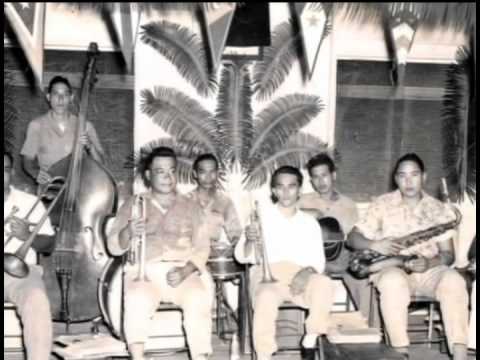
Social events, and the American music often played at them, mostly disappeared


3. SCHOOLS, BUT ONLY UP TO A POINT

Despite Japanese reports and statistics during the Occupation, Guam's children didn't get much schooling during that period.

Japanese reports state that schools were running and teaching roughly 80% of the same number of school kids as prewar times.

But the older people would have told you that any schooling they had during the Occupation was brief and passing.

Even the Japanese reports have to admit the fact that classes were mainly to teach the children basic Japanese vocabulary, with lots of singing, physical exercise and social etiquette involved.

Brighter students who seemed to learn Japanese quicker than others were selected to undergo more vigorous language training in order to become Japanese teachers themselves one day. These managed to pick up some good command of the language, but the majority of Guam's children remained as incapable of carrying on a full conversation in Japanese after the war as they were before the war. 

Today, our school children have to stay at home, many of them complaining of the boredom. The difference now is that the older ones can still do their school work online.


THERE WERE SCHOOLS
during the Occupation
but classes were brief and passing


So as we "suffer" endless hours mindlessly scrolling on our phones, or searching for more engaging videos on Youtube, let us remember, "This is what grandma went through in 1942." Except that she didn't have Youtube.

So when people say our crisis today is "unprecedented," that it's the worst we've ever been through, the point can be debated, but one thing remains clear. Our parents and grandparents went through the Japanese Occupation which, besides the whipping, rape and murders for a lot of our people, did include a whole lot of boredom. There is a precedence for what we're going through now.


Monday, March 16, 2020

KUARENTENA


BEFORE THE WAR


Not only did we have a word for QUARANTINE in the old days, we also had a place for it.

Due to the Coronavirus (Covid-19) situation on Guam, some incoming passengers to the island will have to undergo mandatory quarantine, while others will have to self-isolate at home.

The English word quarantine comes from the Italian word for "forty," quaranta. Because of the Black Death, the port city of Venice in Italy mandated a waiting period of forty days for newcomers to enter the city. It was believed forty days were enough for a disease to manifest in the person, who would then not be allowed in and infect others. For forty days, the person had to stay on the ship or reside temporarily at a nearby residence by the port, but still outside the city proper.

So from the Italian word for "forty," quaranta, we get the English word quarantine.

Well, since we were under the Spanish, we used the Spanish word for it - cuarentena, and in Chamorro with a K - KUARENTENA.


CABRAS WAS QUARANTINE ISLAND


Some people ask why we call it Cabras ISLAND when it doesn't look like an island. It seems connected to Piti.

Now it is, by a man-made bridge. But, in the old days, Cabras was really an island, unconnected to the main island of Guam and completely surrounded by water on all sides.

Thus, being so close to the landing pier at Punta Piti, where passengers and cargo who arrived into Apra Harbor landed, and yet separated by water, Cabras Island was a perfect place for a quarantine station where passengers suspected of having some disease could reside until they were all cleared, or had to get back on the ship and never land.

Cabras, by the way, is the Spanish name for the island. Cabras means "goats." The Chamorro name for the island is Apapa.

In 1910, the German head of the Catholic Mission of the Marianas, which at the time included Guam, was not allowed to even step foot on Guam by the American Navy, so he had to hang out for a brief time at the Cabras Quarantine Station till he found a ride up to Saipan. Rome had put Guam under the rule of German priests, but the Spanish-attached Chamorro people of Guam and the American Navy did not want German priests here.


His name was Father Paulus of Kirchhausen, and you can see in the picture above he gave permission ("Imprimatur") for the publication of a Catholic book for use in the Marianas on June 19, 1910 writing from Apapa, the Chamorro name for Cabras Island, where he was in detention at the Quarantine Station till he was forced to go back to Saipan.

The Cabras Quarantine Station was destroyed, along with almost everything else, in the American bombardment of Guam in 1944. But, many years later, when more building projects on Cabras necessitated field studies of the area, the remains of the foundations of the Cabras Quarantine Station were found and are probably still there.


CABRAS IN 1900
Notice, not connected to the main island

Thursday, March 12, 2020

HOW WE MADE MONEY


guampdn.com

HOMEMADE SALT

made by Rose San Nicolás


Before the modern age of salaries and minimum wages, how did many of our people make money?

If you're 50 years or older, you remember the almost daily voice of children going door-to-door in the village selling food made by their mothers or grandmothers : empanåda, donuts, buchi buchi and a dozen more things.

But in the old days, besides selling ready-made food or products, our people sold raw materials; things more or less in their natural state.

Just to give you an idea, the following is taken from statements made in court by witnesses about how they earned some cash in the early 1900s. Things sold included some products using human skill, and many things just from mother nature.

Manuel, a single man still in his early 20s, sold the following, sometimes partnering with his father :

Copra - the dried meat of the coconut. This was, depending on the period, in high demand. It was the oil contained therein that was marketable. The oil was used in cosmetics, soaps, candles, cooking and many other purposes. Agents, often Japanese, would buy from local farmers and send off to Japan and elsewhere. Copra was a great money-maker for even the poorest Chamorro in those days. At other times, for different reasons such as over-production, the price of copra fell on the world market and local producers were less inclined to make copra.

Corn - the main staple of the Marianas until imported rice overtook it. It was mainly used to make titiyas but could be made into soups and other dishes.

Monggos - the mung bean.

Eggs

Chicken

Mañåhak - the juvenile rabbit fish. This fish was seasonal but in great demand. It was prepared in several ways and could be eaten whole without worrying about the tiny bones.


Marcela, just 16 years old, being smaller in frame, sold things she was better suited to make or harvest.

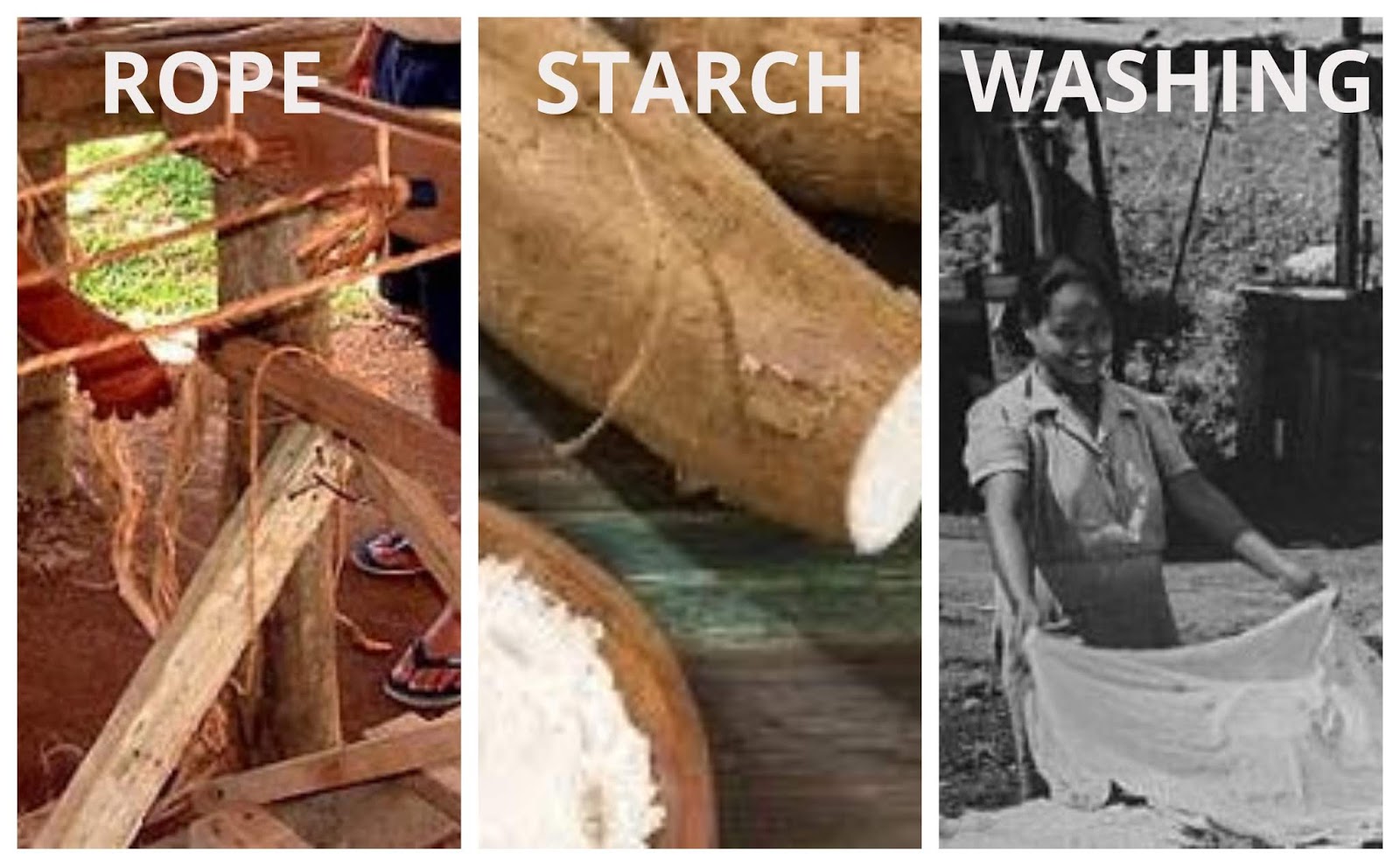
Rope - Our islands had the resources to make ropes and cords locally. Fibers from the coconut tree or from the pågo (wild hibiscus) plant, besides other plants, were used. Her older sister and sometimes her brother would help her operate the crank which twisted the fiber strands into rope. Marcela sometimes sold the fibers alone and let the buyer make the rope him or herself.

Fadang - The nuts of this plant are so poisonous that one has to soak them in water and change the water repeatedly to get the poison out. If chickens drink the first water thrown out, they will die! Despite this danger, and the inferior flavor compared to corn and other foods, our elders used fadang to grind into a flour and then make titiyas when nothing else was available. The flour could also be used as a starch but it wasn't very white and its odor was not pleasant to most people. The flour could be made wet and used as a paste. To give you an idea how offensive fadang is, when used as a paste the insects would avoid the area where it was smeared.

Asiento (starch) - Starch can be made from a number of plants in the Marianas, but the most favored was gapgap. It produced a brilliant white starch. A white shirt was starched splendidly using gapgap. But starch could also be obtained from mendioka (tapioca) and other sources.

Dukduk - A variety of breadfruit.

Huto - These are the seeds of the dukduk tree and were boiled or roasted as a snack. Cooks of old prized the oil from these seeds.

Lemmai - Or breadfruit. When in season it was eaten in abundance in a variety of ways. It was cut into chips and dried (essok) for storage to enjoy it when the lemmai season was over.

Asiga (salt) - Families living near the sea could send the kids to bring home buckets of salt water, the further away from the beach the better. This was boiled to evaporate the water (the slower the boil the better) and leave behind the salt residue. This was then left out in the sun to bleach it as white as possible. Then the salt could be sold to families who, for whatever reason, couldn't make their own. It was used not only in cooking; it was also used to preserve meat.

Washing - Besides selling things obtained from the land, some of our female elders made money by washing people's laundry. A washerwoman was called a labandera, from the Spanish word for the same thing. Washing could be done at home or in the river or in the few public water troughs built by the Spaniards. Drying (ma tåla) could be done by spreading the clothes out on palm branches or woven mats put on wooden platforms or hung on a line. Ironing could be done using a charcoal-filled iron, using starch made from local plants. Some labandera were "under contract" to wash the clothes weekly of some American military officers.


Monday, March 9, 2020

KÅNTA : SI NENI


My favorite line in this song recorded by Alfred Saures from Saipan is,

"Hu fa' eskusa un pugua' yan pupulu."

It means "I made betel nut and pepper leaf an excuse."

The man singing the song is attracted to a lady he has just seen for the first time. Apparently there is no one to introduce them, as he sees her at a social gathering. So, he goes up to her (and the friends she is with) and asks for a betel nut and pepper leaf. Just like people bum a cigarette off of others.

In the act of asking for betel nut, the guy can strike up a conversation with the woman he fancies. The betel nut was just a pretext, an excuse for making contact with her.

This is very cultural, and is vanishing. How many young people bum pugua' and pupulu off of others nowadays? Maybe still in the Northern Marianas, but less so on Guam.


Sumåsaonao yo' mangonne' taotao
(I went along bringing people)
para guato Memorial Hall.
(over there to Memorial Hall.)
Guaha masusede ya ti bai maleffa
(Something happened and I won't forget it)
sa' i eksperiensia sumen båli.
(because experience is very worthwhile.)

Annai todo monhåyan i okasion
(When the occasion all was finished)
eståba yo' yan i man ga'chong. (1)
(I was with companions.)
Annai hu atan guato gi halom homhom
(When I looked there into the darkness)
esta ti hu hongge i dos matå-ho.
(I couldn't believe my two eyes.)

Eståba gue' nai si neni lokkue' yan man ga'chong.
(Baby was there as well as with companions.)
Hu fa' eskusa un pugua' yan pupulu. (2)
(I made an excuse of betel nut and pepper leaf.)
Annai hu tungo' i na'ån-ña
(When I knew her name)
esta ti siña yo' nai kontento
(I already couldn't be content)
gi hinanao-ho yan gi maigo'-ho guihe na puenge.
(on my way and in my sleep that night.)

Maloffan dos semåna ni sikiera kåtta
(Two weeks passed and not even a letter)
masea dilingding telefon.
(not even a ring from the telephone.)
Bula hu siesiente tåddong gi korason
(I felt a lot deep in the heart)
pot ha' si neni man nanangga.
(waiting just for baby.)

Hu resibe kåtta man ma kombibida ham
(I received a letter inviting us)
para fiestan san kattan. (3)
(to a fiesta in the north.)
Annai tumunok yo' gi karetå-ho
(When I got down from my car)
såbe Dios sa' hu li'e' ta'lo. (4)
(God knows I saw her again.)


NOTES


(1) Ga'chong. The literal meaning of ga'chong is companion. That is why we can ask someone what he or she is eating steak with; rice or potatoes? Håfa ga'chong-ña? But it can also mean "friend," in the sense that one is usually accompanied by friends and not strangers or enemies. "Friend" is more properly amigo (male) or amiga (female), or the indigenous word åbbok.

(2) Fa' eskusa. Fa' is a prefix meaning "to make." Eskusa is the verb "to excuse." Hu eskusa hao. I excuse you. Eskuso is the noun "excuse." Håfa eskusu-mo? What is your excuse? But, many times, speakers use the verb when they mean the noun. Everyone understands what is meant.

(3) San Kattan. The singer is from Saipan and there kattan is "north" whereas on Guam most people say lågo for north. The problem comes from the fact that, in Chamorro, we don't think of north, south, east and west. We think of towards the sea, away from the sea, to the left of the sea and to the right of the sea. Kattan means to the right of the sea. Lågo means towards the sea. So these words will take on different meaning, depending on where you, the speaker, are standing in relation to the sea. On the western shore of Saipan, where most of the population lives, to go "north" to Tanapag and San Roque, one goes to the right of the sea, thus kattan. It's the same in Humåtak, Guam. To go "north" from Humåtak to Hagåtña (or even Hågat) you go to the right of the sea, thus kattan again.

(4) Såbe Dios. A phrase borrowed directly from Spanish. It means "God knows." "God knows that I love you." Såbe Dios na hu guaiya hao. Or, if someone asks you a question and you don't know the answer, you can say, "Såbe Dios!" "God knows!' as in He's the only one who does.

Tuesday, March 3, 2020

I MAN GAI TAOTAO


It was because of a science project in 8th grade that I first came to know something more about the suruhåno and suruhåna (folk doctors) of our islands.

I chose for my topic traditional Chamorro medicine, made up mainly of herbs, flowers and roots, and put together by the suruhåno. So I asked an aunt to take me around to a few suruhåna to learn more about this art.

It was then that I learned, "We must choose our suruhåna carefully."

"What does that mean?" I asked. My aunt replied, "Some suruhåno have ga'chong. You can also say these suruhåno are gai' taotao. These are spirit friends who tell the suruhåno information that ordinarily cannot be known, or who give the suruhåna powers ordinary people do not have."

"Like what, for example?" I asked further.

"A suruhåno who had a taotao or a ga'chong could tell the person what he did exactly, and where, to anger the taotaomo'na (ancient spirits). That way the suruhåno can tell the person exactly where to go back and apologize to the taotaomo'na."

"Or, the ga'chong can give the suruhåno the power to heal, or catch an unusually large quantity of fish, or find a medicinal herb in the jungle hard to find."

But the main power of the suruhåno with a spirit friend, the reason why they were often sought out, even by practicing Catholics, is that these suruhåno with spirit friends could ask their spirit friend to lift the punishment inflicted on a person made sick for offending the taotaomo'na in the jungle or near rocks or latte stones or the trongkon nunu (banyan tree).

When western medicine didn't help, and when it was certain that the sick person, often young, misbehaved in those places known as sagan taotaomo'na (spirit places), or didn't ask permission to pass through the jungle or, worse yet, urinate in the jungle, parents were more convinced that a suruhåno with a spirit friend was needed.

So, the suruhåno would speak to his spirit friend as mentioned above. Sometimes, his taotaomo'na would have to fight with the taotaomo'na who made the person sick. If he prevailed, then the sick person got better. If he didn't beat the other taotaomo'na, the sick person stayed sick.

I once asked a practicing Catholic why she went to a suruhåno with a spirit friend, because her grandson was sick. "Ti isao i para ta gågao i taotaomo'na ni ayudu-ña?" "It's not a sin to ask the taotaomo'na for his help?"

She replied, "Ti guåho gumågao na i suruhåno. An isao pues isao-ña, ti isao-ho." "It wasn't I who asked, but the suruhåno. If it's a sin then it's his sin, not mine."

When people feel helpless and think they have no alternative, this is how they reason.


BUT THERE IS A PRICE

"But the suruhåno who agrees to receive the help of a ga'chong has to pay a price,: my aunt said.

"What is that?" I asked.

"That suruhåno has to give up God."

"Oh my!" I said with some fear.

"That is why," my aunt said, "we have to chose our suruhåno carefully."

And so I heard for the first time that there were some suruhåno who never went to church.

One suruhåno, who died just 20-some years ago, had a religious wife who made sure the whole family, even he, went to Mass on Sundays. While the whole family sat inside the church for Mass, he stayed outside the church, close enough to the front door to periodically see what was going on. This suruhåno said nothing bad about God, or religion or the church. He didn't try to dissuade anyone from their Catholic faith, and if he was conversing with someone and the other person spoke about God or prayer, this suruhåno would nod his head in agreement and utter some supportive words. But he himself sat outside for Mass.

He was the exception. Most suruhåno/suruhåna who had a spirit friend avoided going to the church altogether. If the suruhåno couldn't avoid going to church, let's say because it was the funeral of a close relative or friend, the suruhåno with a taotao or ga'chong just stayed outside the church door, looking in. He would never enter the church door.

In fact, it was said that there was this one suruhåno who, even if he attempted to put one foot inside the church, was physically prevented from entering, pushed back by an invisible force.

"Not all suruhåno are gai' taotao or gai' ga'chong," my aunt said. "And even some who have a spirit friend still go to church. But some who have a ga'chong, who have a spirit who tells them secrets and gives them power, some do not go to church. Because it's the devil's knowledge and power."


OTHER SPECIAL MARKS OF THE GAI TAOTAO

Besides the forsaking of Christianity, the gai taotao supposedly couldn't eat salt, either. They couldn't eat salty dishes, add salt to their food or dip fruits in salt as we often do. This might have something to do with the worldwide recognition of salt as a purifying agent which evil spirits detest.

Because the gai taotao communed with these spirits, there was a certain air or demeanor about them. You noticed right away that these suruhåno gave off a different feeling from ordinary people. They weren't the smiley type nor friendly in the normal way. They weren't belligerent either, but they were somewhat stoic and grave.

It was said that they couldn't look another man in the eye. They were often feared by their own people and by their neighbors. You kept a respectful distance from them.

They were usually willing to help you, and many people sought their help when a loved one, especially a child, was sick and western medicine didn't help. But even if your loved one got better, you didn't become best friends with the suruhåno who had a spirit friend. These suruhåno lived almost in a world of their own.


PASSED DOWN

Just as knowledge of herbal medicine was often passed down from parent to child, in many cases, a suruhåno with a spirit friend tapped one of his sons to follow in his path. The father usually enticed the son to join him when the son was a teenager. Sometimes the son struggled with the offer, whether to accept or not.

If a son didn't follow his father's footsteps, the suruhåno might take another boy under his wings, again usually in his teen years. The suruhåno's spirit friend or friends would then also adopt the young man as their own.


IMPRESSIVE, BUT FROM THE DEVIL

Some people were really impressed by these suruhåno with ga'chong.

One man admitted this when he went to see a suruhåno because of a swollen foot. He thought it might be gout, but he never had gout before. Still, he went to a western clinic and got tested. His uric acid was fine. The pills he was given did nothing to alleviate the swelling and the pain. So, he decided to "go Chamorro" and "go suruhåno."

A certain suruhåno was recommended, one the suffering man had never met nor heard of. In fact, he had never gone to a suruhåno before. He met the suruhåno, who told him,

"Five Saturdays ago you parked at the back of Guam Memorial Hospital to visit someone in the hospital. You parked there because you couldn't find any other parking. As you parked, you felt the need to urinate. There was no one around. The sun was setting and it was getting dark. There were coral rocks in front of you, covered with tångantångan and other bushes. You thought you could easily pee there and no one would ever know. Nobody saw you, but the taotaomo'na were right there. You were urinating on their territory, and you didn't even ask permission. So they punished you with the swollen foot you have now."

The man's jaw hit the floor. How could this elderly suruhåno know this? Every detail was completely true! Other people are impressed by the suruhåno's identification of the ailment and the speedy cure of it.

But others would say, "They have knowledge and power, but from the devil. In the end, they get you into worse problems than the problems they cure."


TWEED OF ALL PEOPLE


If you needed more evidence, would you take it from an American Navy radioman who hid in Guam's jungles, avoiding capture by the Japanese, all due to the help he got from Chamorros, many of whom were punished and even killed?

If a man ever needed super human powers, it was George Tweed, often just an inch away from death at the hands of the Japanese.

And one Chamorro woman, probably having a crush on Tweed, was ever-ready to suggest a super human solution.

The story comes from Tweed himself, so take it for what it's worth. It is probably based on fact, but whether the story was embellished for the sake of book sales or not is anybody's guess.

The Chamorro lady of 19 was worried for Tweed. He needed to stay safe from the Japanese. Her uncle knew a man who had a ga'chong. The ga'chong gave this man the power to carry heavier loads and swim farther than other men.

These spirits, she said, were very powerful and could protect Tweed. The spirits could even hide Tweed so that the Japanese would never find him. Was she implying he could receive the power to suddenly become invisible to Japanese search parties? Stand right there and not be seen?

What must he do, Tweed asked? She replied, "Give up God and pray to the devil!"

This was a Chamorro girl speaking, certainly baptized Catholic. And yet this is what she told Tweed, according to him. Tweed declined her suggestion.

Even after almost 300 years of Catholic influence, not every Chamorro gave up old beliefs in spirits. Some even turned to demons, so it was said.

Contrary to what some think, the Spaniards did not make our Chamorro ancestors into little Spaniards. And not all of them became or remained genuine Christians.


NOTES

Ga'chong in Chamorro means "companion." It does not really mean a friend, although many people think it does. But a friend can and does accompany his or her friends at times, so then the ga'chong is also an åbbok,  amigo or amiga (friend). When you see someone eating chicken but nothing else, you can ask the person eating, "Håfa ga'chong-ña i na'-mo månnok?" "What is the companion to your chicken?" Companion; not friend.

Taotao can mean "person" or "people." A suruhåno who is gai' taotao has the spirit of a person long-dead assisting him.

For some reason, it seems that more male suruhåno had spirit friends than female suruhåna, as far as I have heard all my life. Not that it's all suruhåno who have them.

Thursday, February 27, 2020

DINGA' CHÅLAN


This is a dinga' chålan.

In English we call it a "fork in the road."

You know it's a dinga' chålan when you have no choice but to turn either left or right.

That's why, in English, the expression "we have come to a fork in the road" means we have to make a decision, a choice.

DINGA' means "twin" or "pair."

CHÅLAN means "road," "street," "path" or "way."

So a dinga' chålan is when one road has twins, so to speak. It breaks off into two separate paths. It becomes a pair of roads.

If you told an older person about a "tenedot gi chalan," a "fork in the road," they wouldn't know what you're talking about. Language is more than just words. Language is also a way of thinking, imagining and feeling.

"Fork in the road" focuses on the break occurring in the one road. That's why it's "in the road." One road.

Dinga' chålan focuses on the two new roads, like twins sprung from the same original road.

No right or wrong; just two different ways of looking at the same thing. This mentality is shown in language.