SISTER ANTONIETA ADA
Her last name was Ada, but she didn't have a drop of Chamorro blood in her.
But it didn't matter.
The end of war in Saipan in 1944 would give this orphaned Japanese girl a new name and a new identity.
This Japanese girl, 10 years old, would become Chamorro, a Catholic and a Mercedarian Sister.
Later in life, she would recover much of her Japanese roots.
Kimiko Nishikawa was born in Saipan on April 24, 1934, the daughter of a Japanese couple that had moved to Saipan under Japanese rule, like thousands of other Japanese had done. Kimiko was one of six children born to her parents. Her father Tsunetaro was a reserve officer in the Imperial Japanese Army, but before the war broke out he was in the tapioca business on Saipan.
In 1944, when Kimiko was only 10 years old, her parents and all her siblings except her oldest brother, Taiichi, died in the battle between the Japanese and American forces.
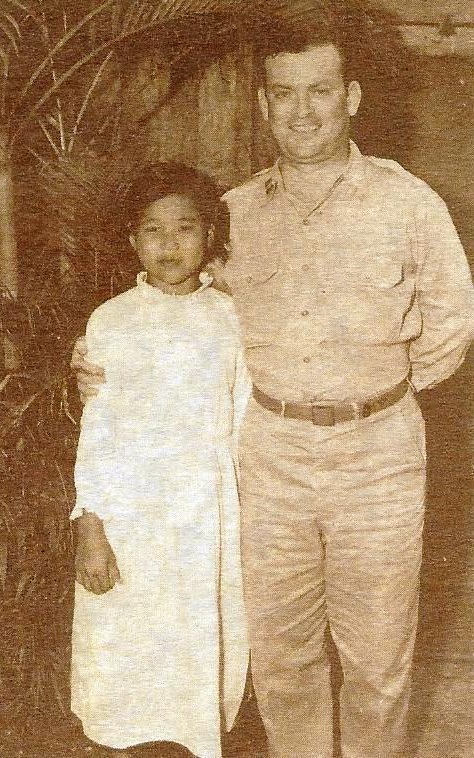
An American Marine officer, Lieutenant James Albert Granier, came across Kimiko, bereft of her parents, in what the Americans called Death Valley, the scene of horrific fighting on Saipan's eastern side, in what is properly called Papago.
When Kimiko's mother was hit by American machine gun fire, Kimiko panicked and ran off, believing her mother to be dead Eventually she got separated from her mother, wounded but not yet dead, but then met up with her brother and other Japanese. They surrendered to the Americans and were taken to Camp Susupe, where they were reunited with their wounded mother, but not for long. Her mother eventually died from her wounds at the camp.
MARINE LT. JAMES GRANIER
Granier was Catholic and became friendly with Saipan's priest, the Spanish Father José Tardío. Granier collected money from fellow American soldiers and put them in a sock to give to the priest to help rebuild Garapan's bombed-out church.
Father Tighe was another Catholic priest who knew Kimiko, the future Antonieta. He was a military chaplain who took to heart the dire situation of the Catholics of Saipan, including the Mercedarian Sisters. He was instrumental in bringing the Mercedarians to work in the United States.
ANTONIETA WITH FATHER TIGHE
not long after surviving the Battle of Saipan
But Granier also had one concern. What would become of Kimiko? Father Tardío told him she would be cared for by a Chamorro family. Father Tardío baptized Kimiko, and Granier was present, as proud as can be. Her Christian name was Antonieta, named after Granier's mother Antonietta. A few days later, James Granier was killed in the Battle of Tinian.
THE ADAS
ANTONIETA IN THE MIDDLE
with her adoptive family
on the right Juan Martínez Ada and wife Ana seated
an aunt on the left
Juan Martínez Ada was one of Saipan's most prominent men. Born on Guam, he was raised on Saipan as a child when his parents moved there. Brought up under the Spanish and German flags, conversant in both languages besides Chamorro, Japanese and English, he emerged after the war as a Chamorro leader the Americans could rely on. Ada became a post-war mayor of Saipan.
He had also been friends with Tsunetaro, Antonieta's (Kimiko's) father. Ada had lost two children in their youth and took a liking to Kimiko, then just 2 or 3 years old. The Nishikawas allowed Kimiko to spend much time with the Adas. It got to the point that Kimiko wasn't sure who her parents were; the Japanese or the Chamorro ones. She even began to wonder who was this Japanese man, her father, who would periodically visit her and give her sweets.
But when Kimiko became of school age, she had to reconnect with her Japanese parents because Kimiko had to go to the school set up for Japanese children, and not go to the school for Chamorro children. So, Kimiko would live with her Japanese parents when school was in session, and during vacation time Kimiko would be with the Adas. "In school I was Japanese," she said. "After school I was Chamorro."
It wasn't all pleasant for her at Japanese school, as her fellow Japanese classmates considered her less than Japanese, calling her toming, a Japanese word literally meaning "island person." It was meant as a put-down, and the term was applied to all islanders, whether Chamorro, Carolinian, Chuukese, Palauan and the rest.
After the Americans took over Saipan, Ada came to Camp Susupe and found Kimiko's dying mother. She told Ada that Kimiko was still in the jungle and for Ada to take her, as she was his "daughter." When Kimiko's mother died in the camp, Ada came and took Kimiko to be raised as his own daughter. Kimiko's brother was forbidden by Japanese law to be adopted by Ada. Only Japanese girls could be so adopted by non-Japanese, but Japanese boys could not, according to Japanese law. Her brother was sent to Japan with all the other Japanese war refugees.
Kimiko, now named Antonieta, settled in with Juan and his wife Ana Crisóstomo Cepeda, and took their last name. She now spoke only Chamorro (and later began to learn English), and her grasp of Japanese weakened to the point of forgetting most of it.
AMERICAN GI WITH JAPANESE CHILD
Camp Susupe, Saipan
SHE BECOMES A MERCEDARIAN SISTER
In 1963, Antonieta entered the Mercedarian Missionaries of Berriz, a Spanish community of missionary sisters who came to Saipan in 1928. She had been attracted to the life of the Sisters since her teens and wanted to join, but her mother Ana opposed it. "Wait until I die," Ana kept telling Antonieta. The Adas had no children living except for Antonieta, and in Chamorro culture it was the daughters, more than the sons, who took care of the elderly parents, especially the mother, in their daily needs. But time was ticking, and one can become too old to be accepted into the convent, so at age 29 Antonieta joined the Mercedarians.
Prior to joining the Sisters, Antonieta had experience in the working world, being a secretary for some official. She had pursued some studies and had traveled. She kept in touch with her Ada relatives on Guam, siblings of her father who had decided to return and do business on Guam. A close relative was a priest on Guam, Monsignor José Ada León Guerrero, son of her father Juan's sister.
After being accepted by the Sisters, she was sent to the Mercedarian house in Kansas City, Missouri and continued her education. She then returned to teach in Saipan "to give back" to her island community, as she said. She also worked in Palau and the Philippines.
She often had asked God before, "Of all the Nishikawa children (to survive), why me?" Perhaps she found her answer in her religious calling to serve the Church and the people.
Before she entered the convent, Antonieta took advantage of an American merchant ship going from Saipan to Japan. She, and a number of Saipanese, sailed in the ship to Japan, where Antonieta met her brother for the first time since the war. He could not speak English, and she had forgotten her Japanese.
RECLAIMING HER JAPANESE ROOTS
In 1977, Sister Antonieta began an eleven-year residence in Japan, where she re-learned Japanese and worked as a missionary sister. For the first two years in Japan, she studied Japanese. Then she did missionary work. She and her older brother would visit each other at least once a year.
But her Saipan roots were much deeper and she returned to her homeland in 1988, and began teaching Japanese at Mount Carmel School in Chalan Kanoa and at Marianas High School in Susupe.
HEALING FROM TRAUMA
Words fail to express the trauma Sister Antonieta experienced through life. The complications of living in two worlds as a child; a Japanese world and a Chamorro one. Her body subjected to the explosion of bombs and the whizzing of bullets, all the while hiding in caves and under trees in the jungle, with little to no food or water, with the smell and sight of death all around her; the loss of her parents and all her siblings save one, her own life at risk.
It's no surprise that at first she hated the Americans, but not for long. The hatred went away but she had no desire to interact with them. In time, especially when she found a job in an island government office with American supervisors, she learned to be comfortable around Americans.
She credited her healing from all these emotional wounds to the total and unconditional love of Juan and Ana Ada. They gave her all they could, especially their faith in God. Sister said, "We do not know the things God has planned for us, but they all work out for our good."
Sister Antonieta passed away on Saipan in 2016. U såga gi minahgong. Rest in peace.
THANKS to Sister MaryAnn Hartmann of the Mercedarian Sisters in Saipan for many of the photos in this article.
VERSIÓN ESPAÑOLA
LA HISTORIA DE SOR ANTONIETA ADA, MMB
Su apellido era Ada, pero no tenía ni una gota de sangre
chamorra.
Pero no importó.
El fin de la guerra en Saipán en 1944 le daría a esta niña
japonesa huérfana un nuevo nombre y una nueva identidad.
Esta niña japonesa, de 10 años, se convertiría en chamorra,
católica y Hermana Mercedaria.
Más adelante en la vida recuperaría gran parte de sus raíces
japonesas.
Kimiko Nishikawa nació en Saipán el 24 de abril de 1934,
hija de una pareja japonesa que se había mudado a Saipán bajo el dominio
japonés, como lo habían hecho miles de otros japoneses. Kimiko fue una de los
seis hijos de sus padres. Su padre Tsunetaro era un oficial de reserva en el
ejército imperial japonés, pero antes de que estallara la guerra estaba en el
negocio de la tapioca en Saipán.
En 1944, cuando Kimiko tenía sólo 10 años, sus padres y
todos sus hermanos, excepto su hermano mayor, Taiichi, murieron en la batalla
entre las fuerzas japonesas y estadounidenses.
Un oficial de los Marines estadounidenses, el teniente James
Albert Granier, se encontró con Kimiko, privada de sus padres, en lo que los
estadounidenses llamaban el Valle de la Muerte, escenario de horribles combates
en el lado oriental de Saipán, en lo que propiamente se llama Pápago.
Cuando la madre de Kimiko fue alcanzada por fuego de
ametralladora estadounidense, Kimiko entró en pánico y salió corriendo,
creyendo que su madre estaba muerta. Finalmente se separó de su madre, herida
pero aún no muerta, pero luego se encontró con su hermano y otros japoneses. Se
rindieron a los estadounidenses y fueron llevados al Campamento Susupe, donde
se reunieron con su madre herida, pero no por mucho tiempo. Su madre finalmente
murió a causa de sus heridas en el campo.
Granier era católico y se hizo amigo del sacerdote de
Saipán, el cura español José Tardío. Granier recaudó dinero de sus compañeros
soldados estadounidenses y los puso en un calcetín para dárselo al sacerdote
para ayudar a reconstruir la iglesia bombardeada de Gárapan.
El Padre Tighe fue otro sacerdote católico que conoció a
Kimiko, la futura Antonieta. Era un capellán militar que tomó en serio la
terrible situación de los católicos de Saipán, incluidas las Hermanas
Mercedarias. Tuvo un papel decisivo para que las Mercedarias trabajaran en los
Estados Unidos.
Pero Granier también tenía una preocupación. ¿Qué sería de
Kimiko? El Padre Tardío le dijo que la cuidaría una familia chamorra. El Padre
Tardío bautizó a Kimiko y Granier estuvo presente, muy orgulloso. Su nombre de
pila era Antonieta, en honor a la madre de Granier, Antonietta. Unos días más
tarde, James Granier murió en la batalla de Tinián.
Juan Martínez Ada fue uno de los hombres más destacados de
Saipán. Nacido en Guam, se crió en Saipán cuando era niño cuando sus padres se
mudaron allí. Criado bajo las banderas española y alemana, versado en ambos
idiomas además del chamorro, el japonés y el inglés, emergió después de la
guerra como un líder chamorro en el que los estadounidenses podían confiar. Ada
se convirtió en alcalde de Saipán en la posguerra.
También había sido amigo de Tsunetaro, el padre de Antonieta
(Kimiko). Ada había perdido a dos hijos en su juventud y le tomó cariño a
Kimiko, que entonces tenía solo 2 o 3 años. Los Nishikawa le permitieron a
Kimiko pasar mucho tiempo con los Ada. Llegó al punto en que Kimiko no estaba
segura de quiénes eran sus padres; los japoneses o los chamorros. Incluso
empezó a preguntarse quién era ese japonés, su padre, que periódicamente la
visitaba y le regalaba dulces.
Pero cuando Kimiko llegó a la edad escolar, tuvo que volver
a conectarse con sus padres japoneses porque Kimiko tenía que ir a la escuela
creada para niños japoneses y no a la escuela para niños chamorros. Entonces,
Kimiko viviría con sus padres japoneses cuando la escuela estuviera en sesión,
y durante las vacaciones Kimiko estaría con los Ada. "En la escuela yo era
japonesa", dijo. "Después de la escuela yo era chamorra".
No todo fue agradable para ella en la escuela japonesa, ya
que sus compañeros japoneses la consideraban menos que japonesa y la llamaban “toming,”
una palabra japonesa que literalmente significa "persona de la isla".
Tenía la intención de despreciar y el término se aplicó a todos los isleños, ya
fueran chamorros, carolinos, chuukeses, palauanos y el resto.
Después de que los estadounidenses se apoderaron de Saipán,
Ada llegó al Campamento Susupe y encontró a la madre moribunda de Kimiko. Ella
le dijo a Ada que Kimiko todavía estaba en la selva y que Ada la llevaría, ya
que era su "hija". Cuando la madre de Kimiko murió en el campo, Ada
vino y se llevó a Kimiko para que la criara como su propia hija. La ley
japonesa prohibía que Ada adoptara al hermano de Kimiko. Sólo las niñas japonesas
podían ser adoptadas por no japoneses, pero los niños japoneses no, según la
ley japonesa. Su hermano fue enviado a Japón con todos los demás refugiados de
guerra japoneses.
Kimiko, ahora llamada Antonieta, se instaló con Juan y su
esposa Ana Crisóstomo Cepeda, y tomó su apellido. Ahora sólo hablaba chamorro
(y más tarde comenzó a aprender inglés), y su comprensión del japonés se
debilitó hasta el punto de olvidar la mayor parte.
En 1963, Antonieta ingresó a las Misioneras Mercedarias de Bérriz,
una comunidad española de hermanas misioneras que llegó a Saipán en 1928. Se
había sentido atraída por la vida de las Hermanas desde su adolescencia y
quería unirse, pero su madre Ana se opuso. "Espera hasta que me
muera", le decía Ana a Antonieta. Los Ada no tenían hijos vivos excepto
Antonieta, y en la cultura chamorra eran las hijas, más que los hijos, quienes
cuidaban de los padres ancianos, especialmente de la madre, en sus necesidades diarias.
Pero el tiempo corría y uno puede llegar a ser demasiado viejo para ser
aceptado en el convento, por lo que a los 29 años Antonieta se unió a las
Mercedarias.
Antes de incorporarse a las Hermanas, Antonieta tuvo
experiencia en el mundo laboral, siendo secretaria de algún funcionario. Había
realizado algunos estudios y había viajado. Se mantuvo en contacto con sus
parientes Ada en Guam, hermanos de su padre que habían decidido regresar y
hacer negocios en Guam. Un pariente cercano era un sacerdote en Guam, Monseñor
José Ada León Guerrero, hijo de la hermana de su padre Juan.
Después de ser aceptada por las Hermanas, fue enviada a la
casa Mercedaria en Kansas City, Missouri y continuó su educación. Luego regresó
a Saipán para enseñar "para retribuir" a su comunidad isleña, como
ella dijo. También trabajó en Palau y Filipinas.
A menudo le había preguntado a Dios: "De todos los
niños Nishikawa (que sobrevivieron), ¿por qué yo?". Quizás encontró su
respuesta en su vocación religiosa de servir a la Iglesia y al pueblo.
Antes de ingresar al convento, Antonieta aprovechó un barco
mercante estadounidense que iba de Saipán a Japón. Ella y varios saipaneses
navegaron en el barco hacia Japón, donde Antonieta conoció a su hermano por
primera vez desde la guerra. Él no hablaba inglés y ella se había olvidado del
japonés.
En 1977, la Hermana Antonieta comenzó una residencia de once
años en Japón, donde volvió a aprender japonés y trabajó como hermana
misionera. Durante los dos primeros años en Japón, estudió japonés. Luego hizo
obra misionera. Ella y su hermano mayor se visitaban al menos una vez al año.
Pero sus raíces en Saipán eran mucho más profundas y regresó
a su tierra natal en 1988, y comenzó a enseñar japonés en la escuela Mount
Carmel en Chalan Kanoa y en la escuela secundaria Marianas en Susupe.
Las palabras no logran expresar el trauma que la Hermana
Antonieta experimentó a lo largo de la vida. Las complicaciones de vivir en dos
mundos cuando era niño; un mundo japonés y uno chamorro. Su cuerpo sometido a
la explosión de bombas y al zumbido de las balas, mientras se escondía en
cuevas y debajo de los árboles en la selva, con poca o ninguna comida ni agua,
con el olor y la vista de la muerte a su alrededor; la pérdida de sus padres y
de todos sus hermanos salvo uno, su propia vida en riesgo.
No sorprende que al principio odiara a los estadounidenses,
pero no por mucho tiempo. El odio desapareció pero ella no tenía ningún deseo
de interactuar con ellos. Con el tiempo, especialmente cuando encontró un
trabajo en una oficina gubernamental de la isla con supervisores
estadounidenses, aprendió a sentirse cómoda con los estadounidenses.
Ella atribuyó la curación de todas estas heridas emocionales
al amor total e incondicional de Juan y Ana Ada. Le dieron todo lo que
pudieron, especialmente su fe en Dios. La Hermana dijo: "No sabemos las
cosas que Dios ha planeado para nosotros, pero todas resultan para nuestro
bien".
Sor Antonieta falleció en Saipán en 2016. Que descanse en
paz.
JAPANESE VERSION
(translated by Sister Yasuko, MMB)
「シスター・アントニエタ・アダの物語」
執筆者 エリック・フォーブス神父による 2024年3月8日
[シスター・アントニエタ・アダ]
彼女の名前はアダですが、チャモロ人の血を受け継いではいません。
日米の激戦地となったサイパンで、彼女は孤児になりました。1994年、彼女の10才のときでした。彼女は戦後、新しい名前と新しいアイデンティティのもとで、チャモロ人として育ち、メルセス会修道院のシスターになるのですが、やがてときを経て、彼女は日本人としてのルーツを取り戻していくことになります。
彼女の本名は西川きみ子。日本の信託統治領であった時代のサイパンで1934年4月24日に日本人夫婦の娘として生まれました。日本の信託統治領に移住してきた多くの日本人と同様に、きみ子の両親もサイパンに移住してきた家族でした。きみ子は6番目の子どもでした。お父さんの“つね太郎”さんは、帝国日本軍の予備役将校でありましたが、サイパンでの戦争が始まる前には、タピオカのビジネスに従事していました。
しかし、1994年の日本軍と米軍の戦火は、彼女の両親と兄弟の生命を奪ってしまいます。
残されたのは、きみ子と長男の太一さんだけになったのです。
米軍の海兵隊士官であったジェームズ・アルバート・グラニエル中尉は、サイパン東部の“死の谷”地域(パパンゴと呼ばれる地域)で、一人逃げ惑っていたきみ子を発見します。“死の谷”とは、多くの日本人と日本兵が追い込まれて、無数の死者を出した地域で、米軍が“死の谷”と名付けた名前でした。そこで、きみ子の母も、米軍の砲弾に打たれて傷を負い倒れてしまったのですが、きみ子は、母は死んでしまったと思ってパニックになり、戦火の中を一人で逃げていたのです。
でも、きみ子の母は重傷を負いつつも、死んではいなかったのです。
[海兵隊士官 ジェームズ・アルバート・グラニエルさん]
日本軍は敗れ、きみ子たちは、ススペにある米軍キャンプに連れていかれました。そこできみ子は、重傷を負っていた母と再会しますが、母はまもなく息を引き取ります。
きみ子の兄弟(太一さん以外)と父がどこで、どのように死んだかはわかっていません。おそらく戦火の中で死んで行ったと思われます。
[米軍兵士と日本人の子ども ススペのキャンプにて]
きみ子を発見して、キャンプに連れて行ったグラニエル中尉は、カトリック信者でした。スペイン人のホセ・タルディオ神父と親しくなり、仲間の米軍兵士から金を集めては、破壊されたガラパン教会の再建のために寄付を行なった人でもありました。
グラニエル中尉は、孤児となったきみ子のその後について心配し、タルディオ神父に相談をします。タルディオ神父は、きみ子はチャモロ人の家族によって世話をされることになるだろうと答えます。タルディオ神父は、きみ子に洗礼を授け、グラニエル中尉も同席し、きみ子にアントニエタという礼名を授けました。その洗礼名は、グラニエル中尉の母の名前をとったものでした。
その時期、サイパンはすでに米軍の手に落ちていましたが、対岸のティニアン島では、まだ戦火がつづいており、グラニエル中尉はティニアン島に派兵され、数日後に戦死してしまいます。
[アダさん家族]
きみ子を引き取ったホアン・マルティネス・アダさんは、かねてからサイパンで著明な人物でした。彼はグアムで生まれた後に、両親と共にサイパンに移住し、サイパンがスペインとドイツの統治下にあった時代に育ち、チャモロ語、英語、スペイン語とドイツ語に精通していました。そして日本の信託統治時代には、日本語をも習得していました。
アダさんは、日本の信託統治時代に、きみ子の父、西川つねたろうさんの友人でもあった人でした。アダさんは、若いときに自分の2人の子どもをなくしていたので、きみ子が2才から3才のときに、きみ子を自分の家に連れてきは、大変可愛がっていました。
きみ子の父も、きみ子がアダさんといっしょに過すのを許していました。
こうしたことから、後にきみ子は、自分の両親が誰であったか、日本人であったのか、チャモロ人であるのかを思い出せないほど、アダさんに近かった幼い日々を過していたのでした。
日本人の男性が、ときどき訪ねてきては、お菓子を彼女にくれたという思い出があるだけで、その日本人が誰であるのかという記憶は残ってはいませんでした。
学校に行く年齢になってきみ子は、チャモロ人の子どもたちが行く学校ではなく、日本人の子どもが通う学校に行かされるようになったことから、自分が日本人の両親の子どもであったことを知ることになります。学期中は日本人の両親と共に暮らし、休暇にはアダさん家族とともに過しました。「学校では日本人」と言われて過し、「学校以外ではチャモロ人」として過していたのです。
日本人学校のクラスメートたちからは、日本人以下として扱われ、「島民」と呼ばれて蔑まれていました。日本人たちは、チャモロ人のことを「島民」と言って見下していたからです。日本人はチャモロ人、キャロリニアン、トラック人、パラオ人たちを、「島民」として蔑んで呼んでいました。
こうしたことから日本人学校は、きみ子にとって居心地の良い場所ではありませんでした。
米軍によるサイパン占領後、アダさんは、ススペにある被災者キャンプで、死ぬ間際のきみ子の母に出会います。きみ子の母はアダさんに、「きみ子はまだジャングルの中にいるから探し出して、アダさんの娘にしてください」と頼んだのです。
きみ子を引き取ることを約束したアダさんでしたが、日本統治下の法律では、日本人の女性を養子にすることは許されていましたが、日本人の男性を養子にすることは禁じられていたため、アダさんはきみ子の兄を引き取ることはできませんでした。
きみ子の兄は、他の多くの日本人の男の子と同じように、戦災孤児として日本に送られていったのでした。
きみ子は、アントニエタとして、アダさんとその妻アナ・クリゾストモ・セペダさんの養女となり、アダさんの名前を頂いて、アントニエタ・アダとなりました。
戦後、アダさんは信頼されるチャモロ人の指導者として頭角を現わし、米国統治下のサイパンでの行政長官となっていきました。
アントニエタは、最初はチャモロ語しかしゃべれませんでしたが、後に英語を学び、次第に、彼女のなかで日本人としてのアイデンティティは、希薄なものになっていきました。
[タイ神父とアントニエタ サイパンでの戦争直後]
米国人のタイ神父は、きみ子を知っていたもう一人の神父で、米軍のチャプレンでした。メルセス会を米国での宣教への道筋を開いた人でもありました。メルセス会は、1928年にサイパンに来たスペイン人の宣教女によって設立された修道会でした。
彼は、きみ子をカトリック教会とベリス・メルセス宣教修道女会のシスターたちに出会わせることになります。
[アントニエタはメルセス会修道院のシスターになる]
1963年にアントニエタはメルセス会修道院に入会します。
10代の頃から、アントニエタは、シスターたちの生き方に惹きつけられ、修道院に入りたいと願うようになりました。でも養母のアナさんは、それに反対し、「私が死ぬまで待って」と言っていたのです。
年老いた両親の面倒を見ること、特に母親の日々の面倒を見ることは、息子ではなく、娘であるという風習があったからです。
でも、時が流れ、アントニエタが29才になったとき、ついにアナさんは許可を与えます。シスターになる前に、アントニエタは社会経験として、どこかの役所で秘書として働く経験もしました。その間、勉強もし、旅行もしました。グアムに行ったときには、グアムに戻ってビジネスの仕事をしていたアダさんの兄弟や、高位聖職者となっていたホセ・アダ・レオンゲレロ神父(アダさんの妹の息子)とも出会いました。
メルセス会のシスターとして受け入れられたアントニエタは、やがてミズリー州にあるカンサス・シティのメルセス会修道院に派遣され、そこで勉学をすることになりました。
サイパンに戻ってからは、サイパンのコムニティーへの恩返しとして学校で教え、さらにパラオやフィリピンでも働きました。
アントニエタは、しばしば神の前で問いかけたのです。「生き残った西川家の子どもの中で、主よ、なぜ私を選ばれ、この道に導かれたのですか」。
修道院に入る前に、日本に行く船でサイパンの人々とともに、日本を訪問する機会もあったアントニエタでしたので、日本を訪れたときに、戦後始めて日本人の兄に出会いました。兄は英語を話せず、アントニエタは日本語を忘れていました。
日本人としてのルーツを取り戻して・・・
1977年になって、アントニエタは日本のメルセス会修道院に、日本語の学び直しと、宣教活動のために派遣されます。最初の2年間に日本語の勉強をし、その後に宣教活動を始めました。この期間にアントニエタは、年に一度は兄を訪問し、兄も彼女を訪問する機会をもったのでした。
しかし、彼女の人生において、サイパンというルーツは、やはり最も深いものでありました。1988年に、彼女は故郷のサイパンに戻ったのです。そしてサイパンのチャランカノアのモン・カルメル高校と、ススペのマリアナ高校で日本語を教え始めます。
トラウマからの癒し
シスターアントニエタの抱いていたトラウマを言葉で表現するのは、とても困難です。子ども時代に、日本人として、チャモロ人として経験した複雑な二つの世界。戦火の下での爆弾の破裂や、銃弾の音、水も食べ物もなく、ジャングルの洞穴や樹の下に隠れて過したこと。延々と横たわる死体をこの目で見、その死臭を嗅いだこと。
両親の死と兄弟との生き別れ、自らの生命を失う危険の中での逃避行の記憶などなど。
米軍との戦いの体験から当初、彼女が米国人に対して嫌悪を抱いていたのは当然でもありました。それはすこしずつ変化して行くものの、米国人と交流することへの抵抗は残っていました。しかし入会前に、政府のオフィスで米国人の監督者たちと共に働いた経験から、その気持ちは変わっていったのでした。
彼女が、過去の辛い経験の感情的な傷から癒されていったのは、彼女を養女としたアダさん夫妻の、彼女への、全面的、無条件の愛のおかげでありました。2人は彼女に、できる限りのこと、特に神への信仰を与えてくださったのです。
「神による私たちへの計らいを知ることはできません。でも、その全てが良い結果をもたらしてくださったのです」と彼女は語っています。
シスター・アントニエタ・アダは、2016年に9月15日に、サイパンで平和のうちに生涯を終え、帰天していかれました。
[マトゥラナ・ヒルにあるシスター・アントニエタ・アダの墓石]
注:
◆筆者は、グアムやサイパンの当時の歴史を記す著述家でもあるエリック・フォーブス神父、グアム在住のカプチン会の神父です。
◆写真はサイパンのシスター・メリアン・ハートマンを通して提供されました。
◆なお、サイパンの歴史状況という背後をわかりやすくするために、文章に手を加えさせていただいた部分があります。また、筆者のエリック・フォーブス神父や、メリアン・ハートマンとメールを交わして、文章や写真の意味を確認しながら訳しました。
訳者 清水靖子


.PNG)
.jpg)
.png)
.jpg)


.jpg)