Friday, July 1, 2011

GUAM STUDENT IN MANILA - 1864


Students at the Escuela Normal de Manila

Spain started to give more importance to education in the Philippines in 1863 with the establishment of a teachers' college, the Escuela Normal de Manila.  "Normal" meant a school for the training of teachers.  The following year, in 1864, the Governor General of the Philippines mandated that a student from the Marianas, which was at the time a Province of the Philippines, be sent to the Escuela Normal de Manila.  Luis Diaz Torres from Guam was selected.

Luis was around 22 years old at the time; the son of Jose Torres and Vicenta Diaz, and the grandson of the famous Sargento Mayor Luis de Torres who had assisted various scientific expeditions that came to the Marianas, and who had good knowledge of the Carolinian islanders who often visited Guam.

It is not known for certain that Luis did in fact go to school in Manila, but he did serve as a teacher, and most often head teacher, in Hagåtña for most of the rest of his life.  This high position in Hagåtña's schools for many years almost certainly points to an earlier education abroad, especially since it is clear that he was offered that opportunity.  Luis was not only a teacher; he was a member of the Chamorro Junta or Council, a group of five prominent Chamorros appointed in 1899 by American Commander Taussig to assist interim Governor Joaquin Perez, a Chamorro.  The Council was short-lived.  Luis later went on to serve as a judge in the American courts of Guam.

I LA TADDUNG NA FINO' CHAMORRO : FA' TAOTAO


bkchandler.wordpress.com

"Fa'taotao" kumekeilek-ña na para un respeta i otro taotao ya un aksepta gue' komo kabåles na taotao.  Lao et mås impottånte guiya i para un respeta i taotao.  I atlibes-ña i para un fa'ga'ga' i taotao, sa' kumekeilek-ña ennao i un chochonnek på'pa' i taotao.  Lao yanggen un fa'taotao i otro, un konsidedera gue' komo acha' taotao-mo, ya mungnga na un po'lo na takpapa'-ña gue' ke hago pat takkilo'-ña hao ke guiya.  Pues ennao mina' sumåsaonao guine i espiritun hinimitde.  Sa' yanggen ti humitde i taotao, siempre ha atan på'pa'.  Lao yanggen humitde i taotao, siempre ha atan todo i pumalo siha na taotågue komo parehu-ña yan achaiguå-ña.

Ti ta fafaisen i ga'ga' håfa malago'-ña para u kånno'.  Ta na' chochocho i ga'ga' håfa i siña ta nå'e pat håfa i malago'-ta para ta nå'e.  Lao yanggen para ta fa'taotao i otro taotao, siempre u ta faisen gue' håfa malago'-ña para u kånno'.  Yanggen un fa'ga'ga' i taotao, pues kumekeilek-ña na un na' parereho ha' i taotao yan i ga'ga', ya ti dinanche ennao, sa' hågo lokkue' taotao.  "Fa'taotao" kumekeilek-ña na ti para un tråta i taotao komo ga'ga'.  I taotao ti ha merese taiguihe na klåsen tratamiento sa' åhe' ti ga'ga' gue', na taotao, pareho ha' yan hågo.  Taimano i sinangån-ña i Saina-ta : Håfa i ti ya-mo na un ma cho'gue, cha'-mo chocho'gue gi prohimu-mo.

Thursday, June 30, 2011

BOKKONGNGO'


Bokkongngo' along the cliffs in Hagåtña

BOKKONGNGO' = bomb shelter, air raid shelter.  It comes from the Japanese word bokugo meaning the same thing.

It's no surprise that the word is Japanese because Guam had no bokkongngo' until the Japanese built them in preparation for the American invasion in 1944.  Some Chamorros were also forced to dig the bokkongngo'.  Not too long ago you could go into some of them and find World War II relics : bottles, shell casings, uniform buttons.

The Chamorro word for "cave" is liyang.

TODAY'S CHAMORRO WORD : FAISEN

FAISEN : to ask (a question, not a favor, nor to ask for something)

Faisen si tåta.  Ask dad.

Faisen si Maria.  Ask Maria.

Faisen i palao'an.  Ask the lady.

Hu fafaisen hao.  I am asking you.

Bai hu faisen gue'.  I will ask him/her.

Bai hu faisen hao.  I will ask you.

Wednesday, June 29, 2011

CHAMORRO EXPRESSIONS : KALAN I MANNOK NI FIGO

connect.in.com
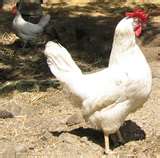
"Like the shivering chicken."

So we describe an emotionally cold or distant person.  Someone from whom we expected a friendly smile, or warm embrace, only to notice that person freeze upon seeing us, as if the person were a shivering chicken.

Rosa : Un li'e si Tomasa nigap?
Maria : Hu'u, lao ti malago' ha atan yo', kalan i mannok ni figo.

Kalan = Like
Månnok = Chicken
Fugo = Cold, chilling, freezing

MARINE DRIVE 1960s

East Agaña
also called Trinchera before the war

TWO LANES!

and you could actually park in front of the stores!

(click picture to enlarge)

BASIC GRAMMAR - UM, part 5

REVIEW OF PAST LESSONS :

Lest we forget :

GIMEN = to drink
Gumimen yo'.  I drank. (UM infix)
Gumigimen yo'.  I am drinking. (Duplication)

HÅNAO = go.
Humånao yo'.  I went. (UM infix)
Humåhånao yo'.  I am going. (Duplication)

For TODAY'S lesson : Using the UM infix with ACTOR-FOCUSED VERBS

In Chamorro, we can look at verbs from either the point of view of the act itself (ACTION-FOCUSED) or from the one doing the act (ACTOR-FOCUSED).

Examples of ACTOR-FOCUSED verbs :

WHO drank the coffee?  Håye gumimen i kafe?
JOHN drank the coffee.  Si Juan gumimen i kafe.

WHO took you here?  Håye kumonne' hao guine mågi?
HE took me here.  Guiya kumonne' yo' guine mågi.

WHO took the key?  Håye chumule' i yabe?
THEY took the key.  Siha chumule' i yabe.

WHO is watching the child?  Håye pumupulan i patgon?  (Notice the duplication)
ANA is watching the child.  Si Ana pumupulan i patgon.

EXERCISES

Fåhan = to buy
Fa'tinas = to make
Lamasa = table
Tuge = write
Lepblo = book
Penta = to paint
Åtof = roof

Translate :

1. Who bought the titiyas?  Juan bought the titiyas.
2. Who made the table?  Jose made the table.
3. Who wrote the book?  Maria wrote the book.
4. Who is painting the roof?  Vicente is painting the roof. (Hint : duplication)

Answers tomorrow

Tuesday, June 28, 2011

I LUTO


Two women in LUTO receiving military commendation for the wartime death of her son.
The younger lady could have been the deceased's widow or sister.
1960s

LUTO : the custom for women to wear black for one year, from the death of a significant relative until the first anniversary.  As one saina told me, "I luto i attilong na magågo desde ke måtai, yanggen dos umasagua, måtai uno, siempre un åño para u fan luluto ha'."

Only women wore the luto.  Mothers for their children; wives for their husbands.  Daughters for their parents.  This was de rigueur.  But sisters could wear the luto for their deceased siblings, if they wanted.  In-laws (yetna, kuñåda) could wear black skirts but white blouses.

In the old days, it was meaningless to ask for what occasions the women would wear the luto, because the women wouldn't go anywhere for that year of mourning, except to church.  They did not go to parties or picnics or movies or any functions at all, except church.  "Sakrifisio.  Hokkok ha' i para u falak i gima'yu'us."

When the first of my grandmother's siblings died, the surviving siblings wore black to church for one year.  But some were less strict about not going to social events, while one auntie was more strict about it, as she was more strict about everything!

I knew two elderly sisters in the 1970s and 80s, from the Tuncap family, who went to Mass everyday in black; one in a black mestisa, the other in a black modern dress, sitting next to each other at every Mass, every single day! They followed the custom of some widows who wore black for the rest of their lives!

The luto is not followed anymore.  Women still wear black many times today, but just for the funeral.  One lady told me that her elderly mother, many years ago, told them not to wear the luto when she died because "mangombibida."  That literally means "it invites," meaning wearing the black is asking for another death in the family.  But another lady told me, "Mandagi! Todo ennao ti bai hongge.  Si Yu'us ha' mangongonne'.  Si Yu'us tumungo' i oran i finatai taotao." (She's lying!  I won't believe any of that.  Only God takes people.  God knows the hour of a person's death.)

The custom of the luto is not indigenous.  It is not even necessarily Christian alone.  The wearing of black as a sign of mourning was practiced by different peoples and cultures, in different places at different points in history.  But there were exceptions, such as white, which was the color of mourning for some European royalty many years ago.

The Spaniards brought the custom of the luto to the Marianas, and the word luto is Spanish (from the Latin luctus, for "sorrow, affliction").

examiner.com

Queen Catherine de Medici in Mourning
Lumuluto si Rarainan Catalina

PARA TA FAÑÅLEK HA'


Rosa : Maria, kao esta un li'e i nuebo na pale'-ta?
Maria : Hunggan, ya ei na dinikkike'!  Lokå'-ña yo' ki ni guiya!  Håye na'ån-ña?
Rosa : Si Påle' Sixto.
Maria : Sixto?  Maolek-ña ta ågang gue' Påle' Five Two.

Monday, June 27, 2011

LÅNCHON KOTPUS 2011

STEP ONE


STEP TWO


MONHÅYAN!


This family used palm fronds and sprayed them gold to form the sunburst backdrop of the statue of the Sacred Heart.

OTRO NA LÅNCHO SIHA


OCEANSIDE, CALIFORNIA
2010


STAFF EVALUATIONS - 1871

The Spanish colonial government periodically sent to Manila reports evaluating the work of the various civil officials in the Marianas.  The following summaries are about the Chamorros serving in the colonial government in 1871, specifically in the Chamorro Militia.

JOSE AGUILAR - He was the Captain of the Compañía de Dotación, which was the Chamorro militia.  There was an Aguilar family on Guam - Chamorros - some of whom at least were Pangelinans on their mother's side.  An Aguilar woman married a Torres and their descendants became known as the Agilåt Torreses, because of their mother's last name.  Jose Aguilar was described as someone who perfectly fulfilled his duties; possessing the firmness to fulfill them; was blindly obedient to his orders; had much love for Spain.

JUSTO DE LA CRUZ - Second-in-command of the Dotación (Militia).  Was described as lacking firmness but one who fulfills well what he is ordered to do.  He was of good conduct and was a lover of Spain ("amante de España").

JOSE RIVERA PEREZ - Second Lieutenant or Ensign of the Dotación.  Was described as lacking much talent, but who was very exact and obedient in fulfilling orders.  "Passionately loves" Spain and its government.  Was well-informed of all police matters and no one was better than him in providing these services, as he was a constant pursuer of criminal elements in the community.

ANDRES DE CASTRO - 1st Adjutant of the Dotación.  Lacked much education but who had sufficient practical knowledge; very punctual, possessed much will and did his job satisfactorily.  He was assiduous in his work.

JOSE HERRERO - 2nd Adjutant of the Dotación.  Had enough intelligence to fulfill his work with exactness, though without all the necessary firmness.  He had numerous children whom he loved with special affection, and he had a love for Spain.

VICENTE OLIVARES CALVO - Captain of the Port.  Son of Felix Noriega Calvo.  Though he had no Chamorro blood, he was a long-time resident of Guam and part of the Calvo clan that eventually married into Chamorro families (Anderson, Perez, etc).  Described as someone alert in the execution of his duties, who gets on very well with everyone and who is very esteemed in the island.

Sunday, June 26, 2011

CHILDHOOD MEMORIES


Do you remember, annai måtai i kandet, what did our grandma do when the power died?  She went and got the fållot, the kåndet pretoleo, the kinke'.

I loved the kerosene lamps.  Ours had a glass fuel tank, so you could see the wick (metcha) soaking inside.  Remember how, as kids, we wanted to play with the knob that raised the wick to create a bigger flame, only to raise it too high and create sooty smoke?   The kerosene lamp engaged the senses lovingly, compared to the fluorescent tubes that assault them.  With modern lights, one flip of the switch is all it takes.  The kerosene lamps had to be filled with fuel, the wick trimmed and adjusted, the vase put on right.  Modern lights involve no odors, but, with the lamps, you had to smell the kerosene.

Then there was the sense of sight.  The kerosene lamp produced a comforting, soothing and intimate feeling for me.  I remember the shadows and degrees of illumination it created in a dark room.  Much nicer than the bright electrical lights where everything was too visible in a less soothing, monotonous way.

Fållot = from the Spanish "farol," meaning "lantern, lamp"

Pretoleo (or petroleo) = from petroleum, though we used kerosene

Kinke' = from the Spanish "quinque," a lamp with a glass chimney.  Named after the Frenchman Antoine-Arnoult Quinquet, who designed one.

A CHAMORRO IN THE BONIN ISLANDS


THE BONIN ISLANDS IN BETWEEN JAPAN AND THE MARIANAS


What are the Bonin Islands, you ask?

They are Japanese islands just north of the Marianas.  Chamorros call them the "Islas Boninas."

For hundreds of years, the Japanese considered them their own, but failed to occupy them.  That gave the British and American whalers and seamen, tired of their wandering life, a chance to settle there in the 1830s.

Being close to the Marianas, the Anglo-American settlers in the Bonins had much contact with Guam in the 19th century.  A Chamorro woman, Joaquina de la Cruz, left Guam in 1844 to escape her abusive husband, and ended in the arms of John Millinchamp, a British settler in the Bonins.  She brought along with her a niece, Maria Castro de los Santos.  We're not sure if Maria intended to leave or just say goodbye to auntie, and the ship set sail before she could get off! She was just a teenager at the time, we think 15 years old.

Maria first married Matteo Mazarro, an Italian but also a British subject and first British governor of the Bonin Islands (Japan was still uninvolved in the islands).  She had two children from him.  Mazarro soon died, and Maria then married an American settler in the Bonins, Nathaniel Savory from Massachusetts.  With Savory, Maria had a number of children; half-Chamorro, half-Caucasian.


SONS OF MARIA CASTRO SANTOS
The two older men seated, Horace (left) and Benjamin (right) Santos Savory


Twice, the Spanish government in Guam sent passports to the Savories so that they could go to Guam to get a Catholic wedding, but they never did.  Savory eventually preceded Maria in death, and she married a German named William Allen.

Maria Castro de los Santos - perhaps the only Chamorro living on an island controlled by English and Americans; populated by a United Nations of peoples : Polynesians, Micronesians, various Europeans and people from Africa; with the Japanese eventually resuming control over the islands in 1875.  With whom could she speak Chamorro?  She probably spoke her own brand of English.

There was no Catholic church in the Bonins.  But, as a visiting Protestant missionary said of Maria, she never gave up her Catholic faith, never sewing on Sundays and always crossing herself and praying.

Maria had ten children with Nathaniel Savory.  They in turn married people from all sorts of ethnic backgrounds, and when the Japanese took control in 1875, many Japanese settlers married into the Savory family.  Today, traces of Chamorro blood run through their veins because of Maria Castro de los Santos.  Her bones are part of the soil up there now.


GRANDSON OF MARIA CASTRO SANTOS
Daniel Webb Savory
1889 ~ 1948

Saturday, June 25, 2011

FAMILIA : QUITUGUA

QUITUGUA
Ketugua'

"Attempting to knock down, cut down"

Almost all authentic Chamorro surnames that begin with "Qui" are names that mean "attempting to," or "tending towards."  The actual Chamorro word is "ke." 

Ketungo' means "trying to know."
Kematai means "tending towards death."

So, in the surname Quitugua, one must find out what tugua' means.  It means "to fell, to cut down or throw down an object to the earth."  When one cuts down a tree to fall to the earth, that is tugua'.  When you play båtu and knock down the stick, that is tugua'.

Quitugua, or ketugua', therefore means "attempting to knock/cut down."

Our ancestors gave children curious names like that.  Taitano (no land), Terlaje (no son/male), Chargualaf (to hunt crab in the moonlight badly).  Naming babies with cute names like Ha'åne (day), Pution (star) or Tåse (ocean) was not something our ancestors did much.

MAINLY A HAGÅTÑA NAME

In the 1897 Census, most of the Quituguas on Guam lived in Hagåtña.  You remember that in the 1700s, Hagåtña was where the newcomers lived, many of them married to Chamorro women and their children mestiso, carrying on most of the culture and language.  Very few Hagåtña residents in the 1700s had Chamorro last names; they mainly had Hispanic names (Cruz, Santos, Leon Guerrero, etc).

It was in the outlying villages (Mongmong, Asan, Tepungan, Sinajaña, Pago) where the more Chamorro-blooded and Chamorro-named people lived.  So the Quituguas were more than likely originally from one or more of these outer villages who, by 1897, moved in large part to Hagåtña.

From the 1897 Census :

JUAN QUITUGUA, a widower and 73 years old
his son Demetrio, still single at 44
Juan could have been the father of some of the people below, if only we had more complete records.

QUITUGUA-SALAS
Joaquin Salas Quitugua (married to Soledad Campos de Leon Guerrero)
and possibly his brother
Jose Salas Quitugua (married to Juliana Quisalao Merfalen)

QUITUGUA-BENAVENTE
the children of Jose Quitugua and Maria Benavente

QUITUGUA-QUINTANILLA
Justo Quitugua (married to Lorenza Quintanilla)
and his probable two sons :
Ramon Quintanilla Quitugua (married to Nicolasa Mangloña)
Joaquin Quintanilla Quitugua (married to Maria Camacho)

QUITUGUA-DUEÑAS
Juan Quitugua (married to Josefa Dueñas)

QUITUGUA-SANTOS
Jose Quitugua (married to Maria Santos)

QUITUGUA-ACOSTA
Jose Quitugua (married to Vicenta Acosta)
their son Vicente Acosta Quitugua (married to Maria Manalisay Dueñas)

QUITUGUA-LIZAMA
Juan Lizama Quitugua (married Maria Santos Diaz) They moved to Saipan

ASAN QUITUGUAS

Seem to be the descendants of Tiburcio Quitugua, whose middle name may have been Rodriguez

SUMAY QUITUGUAS

Juan Quitugua, his wife Antonia Camacho and their children lived in Sumay

Friday, June 24, 2011

LÅPIDAN SAIPAN

Mount Carmel Cemetery
Chalan Kanoa
Saipan
As late as 1914, Chamorros were still writing some of the låpida (grave stones) in Spanish.  This one says :

RIP
Aquí llasen los restos mor-
tales de Leonardo Camach-
o y Muña que falleció el
día 28 de Julio de 1914, a los
47 años  y 1 mes de edad.
Dedica este recuerdo de
su esposa e hijos.  Rogar
por el eterno descanso
de su alma.
QEPD

Rest in Peace.
Here lie the mortal remains of
Leonardo Muña Camacho,
who died on July 28, 1914 at the age of
47 years and one month.
This memorial is dedicated by
his wife and children.
Pray for the eternal repose
of his soul.
May he rest in peace.


The RIP is Latin for "Requiescat in Pace," meaning "Rest in Peace."  The QEPD is Spanish for "Que en paz descanse," or "May he rest in peace." "Llasen" should have been spelled "llacen."  The family re-painted the låpida, tracing the grooves left behind in the original, and, not being Spanish speakers, there are a few glitches.

By 1914, the Germans had been governing Saipan for 15 years, but the Spanish influence was still very strong (even to this day, to some extent,  in religious customs).